
41+ FASCINATING Facts about Stoke-on-Trent, England

WONDERING WHAT ARE SOME FUN AND WEIRD FACTS ABOUT STOKE-ON-TRENT?
Stoke-on-Trent – the northernmost city in Staffordshire and the West Midlands – is England’s ceramic capital and so much more. This unique city, formed as a single county borough in 1910 before gaining city status in 1925, boasts a rich industrial heritage centered around its world-renowned pottery industry.
As a local resident myself, I’ve explored the depths of each of Stoke’s six towns over the years – from the best visitor centres, museums and hidden gems, and still find myself discovering more about this city all the time, and learning interesting stories from fellow Stokies and within the city’s communities.
I’ve now compiled together a collection of my favourite and lesser-known facts about this often overlooked city famously known as England’s iconic pottery powerhouse.
VISITING STOKE-ON-TRENT SOON?
→ Find all the best accommodation deals on Booking.com Easily
find, book and enjoy great hotel deals with free cancellation on one easy platform.
Our top suggestion – The Upper House (Wedgwood family home where we stayed & highly recommend!)
→ Compare Bus, Coach & Train Prices on Omio.com
→ Reserve your Rental Car here: DiscoveryCars.com
Overview: General Info & Facts
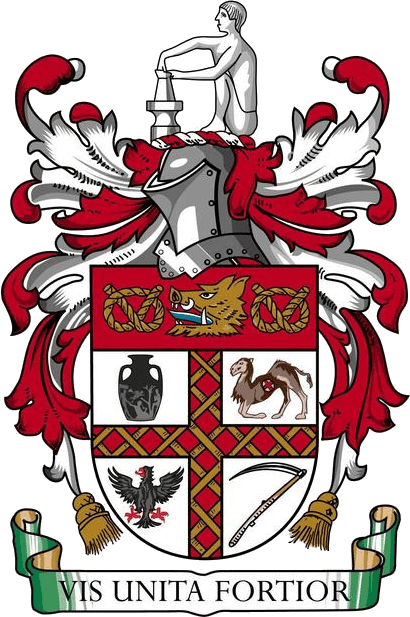
City Motto: Vis Unita Fortior (united strength is stronger)
Population: 259,965 (2022) (72nd in UK)
Area size: 36 square miles
Founded: 670 AD (settlement), 1910 (federation of 6 towns), 1925 (city status)
County: Staffordshire
Highest Peak: Meir Heath, 258m above sea level
Largest Lake: Westport Lake
Local dish: Oatcakes
Unique Features: Pottery factory shops, bottle kilns, award winning museums
Hidden gem: Mow Cop Castle, Trentham Monkey Forest, Potteries Museum
Stoke-on-Trent Map


Where is Stoke-on-Trent?
Stoke-on-Trent is located in the West Midlands region of England, within the county of Staffordshire. It’s strategically positioned between major UK cities, with Manchester 45 miles to the north (roughly an hours drive away), and Birmingham 45 miles to the south (about 50 mins drive away).
What is Stoke on Trent famous for?
While the pottery industry remains its crowning glory, this smallest city to achieve city status boasts surprises at every turn – from the UK’s top theme park; Alton Towers Resort to the Gothic ruins of Mow Cop Castle. Stoke on Trent is also home to the world’s greatest darts player and the world’s strongest man!
General Facts about Stoke-on-Trent
Here are 13 general facts about Stoke on Trent. How many of these did you know?
1. The World Capital of Pottery
The region has been almost exclusively known for its industrial-scale pottery manufacturing since the 17th century. Thus, pottery and ceramics are central to the city’s identity. The World of Wedgwood and Potteries Museum showcase 400+ years of ceramic history. Visit Stoke to own pot masterpieces from factory shops.
2. Stoke-on-Trent: a City of Six Towns
Stoke-on-Trent is the smallest city in the UK to have city status.
What are the 6 towns of Stoke-on-Trent?
Stoke-on-Trent is a unique city, formed by the federation of six towns in 1910 becoming a county borough. Each of these towns has its own distinct character and history, contributing to the rich tapestry of Stoke-on-Trent.
The first town, Tunstall, is the northernmost of the six. It’s known for its beautiful Victorian and Edwardian architecture, reflecting its prosperous past.
Next is Burslem, often referred to as the “Mother Town” of the Potteries. It’s the birthplace of the famous potter Josiah Wedgwood and home to several historic pottery factories.

Hanley, the city centre, is the third town. It’s the commercial hub of Stoke-on-Trent, boasting a vibrant mix of shops, markets, restaurants, cafes, and cultural venues.
The fourth town, Stoke-upon-Trent, gave its name to the city. It’s home to the mainline railway station, Staffordshire University, and the Stoke Indoor Markets, and was the former centre of government of the district.
Fenton, the fifth town, is known for its historic town hall and thriving community spirit. The smallest of the six, Fenton wasn’t originally included at first.
Finally, Longton, the southernmost town, is famous for its preserved bottle kilns and rich pottery heritage.

3. The Residents are known as “Stokies”
“Stokie” is the term given to someone who was born in or resides in Stoke-on-Trent.
➤ Psst… Looking for a place to stay?
Find all the best Stoke hotels on Booking.com. Easily find, book and enjoy great hotel deals with free cancellation on one easy platform. Our top suggestion – The Upper House, an 18th century manor home that Josiah Wedgwood built and gifted his grandson!
4. Stoke almost Annexed Newcastle-under-Lyme as a Seventh Town, but was Rejected
Following the federation of six towns in 1910, there was momentum to include a seventh town; Newcastle-under-Lyme, which is surrounded by Stoke-on-Trent and situated right beside Hanley.
However, those plans fell apart, first in 1919 and again in 1930, as the residents of Newcastle-under-Lyme made it clear they do not want to merge with Stoke, because they are not a pottery town. In fact, Newcastle has its own unique separate identity as one of Staffordshire’s ancient royal market towns.
5. Stoke was Initially Refused City-Status by the Government, until the King Stepped In
When the newly-federated borough of Stoke-on-Trent applied for city status in 1925, citing its importance as the centre of the pottery industry, the Home Office initially refused, as it had fewer than 300,000 residents (source: BBC News).
However, a direct approach was then made to King George V himself, who agreed that the borough ought to be a city, and he overturned the government’s decision.
The public announcement of the elevation to city status was made by the king during a visit to Stoke-on-Trent in June 1925.
6. The Houses of Parliament Floor Tiles were Made in Stoke
The tiles on the floor of the Houses of Parliament in London were made by Minton of Stoke-on-Trent, a rival of Royal Doulton.
Read more Facts posts:
42 Fun Facts About Birmingham
24+ Interesting Black Country Facts
7. The Oatcake is the Local Food of Stoke
A type of dense and savoury soft, yeasted oatmeal pancake, oatcakes are usually eaten with hearty fillings such as sausage, bacon, mushroom, and cheese.

Dating back as far as the 18th century, they were the staple diet of the locals until the boom of the 1960s when supermarkets sprang up and cars became more affordable, more exotic foods became available and the humble oatcake all but died out.
In recent years, thankfully, the oatcake has seen a revival – fairly cheap, filling and tasty, but also a symbol of the city and its humble working class residents. Some of the best oatcakes can be found in London Road cafes.
Other local delicacies include lobby (a bread pudding-like dish), pan yoghurt (a creamy yogurt-based dessert), and a range of Staffordshire cheeses. And let’s not forget the city’s rich brewing heritage, with local breweries like Titanic Brewery, Lymestone, and Joules Brewery crafting some of the finest ales in the region.
Popular Stoke-on-Trent Articles:
The 15 Best Restaurants in Stoke
14 Award-Winning Pubs Around Stoke
8. Stoke is Home to the UK’s Only Monkey Forest
Trentham Monkey Forest in the southern suburbs of Stoke, lets you walk among 140 barbary macaques as they roam free like they would in the wild, in 60 acres of Staffordshire woodland.

9. A Man Fell into a Hole in Hanley and Was Never Seen Again
One of the most grim and strange facts about Stoke on Trent; Candle-maker Thomas Holland was walking down St. John Street in the city centre when a disused pit shaft opened up beneath him. To this day his body has never been found (source: Stoke Sentinel).
10. Coal Mining in Stoke Broke National and World Records
The colliery at Wolstanton, when modernised, had the deepest mine shafts in Europe at 3,197 ft. In 1933, Chatterley Whitfield Colliery became the first colliery in the country to mine one million tonnes of coal.
And in 1992 the combined Trentham Superpit (Hem, Heath and Florence) was the first mine in Europe to produce 2.5 million tonnes of saleable coal.

Today all the mines are now closed, though the scars of mining remain on the landscape – huge slagheaps are visible on the skyline, covered in flora and fauna, and they still add complications to building projects around the city.
11. The British Ceramics Biennial Festival is Held in Stoke
Stoke-on-Trent also hosts the British Ceramics Biennial, a festival celebrating contemporary ceramics. This event showcases Staffordshire ceramics innovation, proving that Stoke-on-Trent’s pottery heritage is not just a thing of the past, but a vibrant part of its present and future.
12. Murdoc of Gorillaz Hails from Stoke
The fictional character Murdoc Niccals, the bassist member of the iconic band Gorillaz with the role of bass guitarist is (in his constructed biography) said to have been born in Stoke-on-Trent.

13. Though the Pottery Industry Declined, the City Shifted Focus to Other Industries
Stoke was once proudly the capital of the world’s pottery and ceramics industries. Although these industries have fallen into decline, a few pottery companies remain operational on a smaller scale, whilst others have long since shut down or become museums.
These days, Stoke-on-Trent is now a centre for service industries and distribution centres.
6 Stoke History Facts
12. Why Stoke?
The name Stoke is taken from the town Stoke-upon-Trent, the original ancient parish, with other settlements being chapelries.
13. Stoke Name Origins
“Stoke” derives from the Old English term stoc, a word that meant merely a place, but over time gained more specific and divergent connotations.
These variant meanings included dairy farm, secondary or dependant place or farm, summer pasture, crossing place, meeting place, and place of worship. It’s not clear which of these was the intended meaning, though all are plausible.
14. How did Stoke become Stoke-on-Trent?
Due to Stoke being such a common name for a settlement, some sort of distinguishing affix was added later, in this case the name of the river, hence it became known as Stoke-on-Trent (in much the same way Burton is called Burton-on-Trent, and Stratford is Stratford-upon-Avon).
→ Related post: Read my expert guide on all the top kid-friendly things to do in Stoke during the summer
15. Coal has been Mined here Since the 13th Century
The first reports of coal mining in the area date back as far as the 13th century, located at the Potteries Coalfield (part of the North Staffordshire Coalfield), covering some 100 square miles (300km-squared). This discovery fuelled Stoke-on-Trent’s pottery industry.
16. The 1842 Nationwide General Strike began in Stoke
Striking coalminers in the Hanley and Longton areas of Stoke-on-Trent ignited the nationwide 1842 General Strike and the Pottery Riots, affecting factories, mills and mines all over Britain.
Due to civil unrest, the strike was a response to wage cuts and unfair working conditions that saw nearly half a million workers take part, representing the biggest single exercise of working class strength in 19th century Britain.
17. The World’s Second-Oldest Professional Football Club
Stoke City FC was founded in 1863, making it the second-oldest professional football club in England and in the world. Their passionate fans are known as the “Potters”, a nod to Stoke’s ceramic legacy.

Stoke is also the smallest city to boast two professional football clubs in the English Football League (the other being Port Vale FC).
18. The Largest Discovery of Anglo-Saxon Treasure
The Staffordshire Hoard, discovered near Mow Cop in 2009, contains over 4,000 pieces of 7th-century gold and silver warfare artifacts. This Anglo Saxon treasure includes sword fittings that may have passed through the Potteries region when it was part of the Kingdom of Mercia.
The collection, valued at £3.3 million, represents the largest hoard of Anglo-Saxon gold ever found and can be seen at Birmingham Museum and the Potteries Museum.
→ Read More: When is The Best Time to Visit The West Midlands? (An Insider Guide)
6 Towns of Stoke-on-Trent Map
Below is a map of the six old towns that form the polycentric city of Stoke-on-Trent:

Related post: The 6 Towns of Stoke-on-Trent Maps (Free Downloadable PDFs)
Driving around Stoke?
The best way to get around this city and outer region is by car, for flexibility, speed and comfort. If you don’t have your own, we recommend renting a car. Our go to site is DiscoverCars – we’ve used them at home and abroad for years, and we like their transparency, great reviews, and easy-to-use site.
Famous People from Stoke-on-Trent
★ Josiah Wedgwood (1730-1795), considered the “World’s Greatest Innovator”, was a famous potter, entrepreneur and abolitionist who founded the world-famous Wedgwood Company in 1759, developed improved pottery bodies by systematic experimentation, invented Jasper ware and Queens ware, and was the leader in the industrialisation of European pottery manufacture.
★ Thomas Wedgwood, son of Josiah Wedgwood, is known for his discovery of the first photo-sensitive (light-sensitive) chemicals – silver nitrate and silver chloride in the 1790s.
★ Captain Edward John Smith (1850-1912) born in Hanley, was the ill-fated commander of the RMS Titanic and famously went down with the ship when she sank on 15th April 1912.

★ Football legend Sir Stanley Matthews, known as “The Wizard of Dribble”, was born here. He’s regarded as one of the greatest players of all time.
★ Eddie Hall, is a retired strongman born in Newcastle-under-Lyme (a town surrounded by Stoke-on-Trent), and held the title of World’s Strongest Man on several occasions and holds a world record for his 500kg deadlift feat in 2016. Currently he’s an actor and producer, known for his role in Expendables 4 and Winter’s Inferno.
★ Singer Robbie Williams, one of the UK’s best-selling artists and former member of Take That, also hails from Stoke-on-Trent. Robbie famously follows local side Port Vale in Burslem, where he’s frequently spotted watching a game.
★ Guitar legend Slash (of Guns N’ Roses fame) grew up in Stoke near Longton.

★ As well as Slash and Robbie Williams, other notable musicians from Stoke include the indie rock band The Lostprophets, grime artist Lunar C, and singer-songwriter Abi Ocia.
★ Actor Neil Morrissey (born 1962) hailed from Stoke-on-Trent and is well-known for TV roles in Men Behaving Badly, Line Of Duty, Waterloo. Road, Boon, and more.
★ Phil Taylor, nicknamed ”The Power”, is regarded as the Greatest Darts Player of All Time with a whopping 16 World Champion titles, and hails from Burslem.
★ The city has also produced many more acclaimed actors like Hugh Dancy, Jonathan Wilkes and Billy Howle, and TV stars such as Anthea Turner, Neil Hancock, and Rachel Shenton, and TV and radio presenter Nick Hancock.
10 Interesting Facts About Stoke on Trent for Kids
✪ On the natural side, the city is part of the North Staffordshire Green Belt and the National Forest, boasting plenty of green spaces for outdoor activities.
✪ The grandson of the Titanic captain Edward John Smith (born in Stoke-on-Trent), was a war hero who died in battle. Simon Melville, son of Capt Smith’s daughter, Helen, flew in the RAF during the Second World War.
✪ Stoke-on-Trent is the largest settlement in Staffordshire and is surrounded by the towns of Newcastle-under-Lyme, Alsager, Kidsgrove, Biddulph, and Stone which form a conurbation around the city.
✪ Stoke is the UK’s only polycentric city, due to being formed by the federation of six towns in 1910.
✪ The city is home to one of the oldest surviving bottle kilns in the world, dating back to the 18th century. These iconic structures were once used for firing pottery and now serve as a reminder of Stoke-on-Trent’s industrial heritage.
✪ Stoke-on-Trent was once the world’s leading producer of ceramics, with over 4,000 pottery companies operating in the area at its peak.
✪ Today, the city remains a major hub for the ceramics industry, with companies like Wedgwood, Royal Doulton, Spode, Emma Bridgewater and Portmeirion still based there.

✪ The city’s iconic red and blue-glazed pottery is so distinctive that it has been given its own name – “The Potteries Ware”. This unique style of ceramics has been produced in Stoke-on-Trent for centuries and is celebrated as a symbol of Stoke’s artistic heritage.
✪ Stoke City FC once had a vicar in the squad. Playing in midfield, Father Elijah Smith swapped his cassock for the jersey to play for the Potters in the 1880s. He starred in the club’s first-ever win against Notts County.
✪ Etruria Industrial Museum is the location of the region’s first public hospital. Some folks believe the site is haunted – with alleged sightings of a ghostly barge back in the 1990s.
Further reading: The Best Pumpkin Picking Spots Near Stoke-on-Trent
Top Stoke Activities For Visitors
For Families:
→ Trentham Monkey Forest – walk with monkeys at the UK’s only primate forest
→ Alton Towers Resort – ride exhilarating rollercoasters at the UK’s number one theme park. Get a discount when you book tickets in advance HERE:
→ Potteries Museum & Art Gallery – see the Staffordshire Hoard, try the potter’s wheel, and see a WW2 spitfire on display
→ World of Wedgwood – packed with interactive exhibits, pottery workshops and more.
For Culture Lovers:
→ Explore the cultural quarter in the city centre’s art gallery and theatres, visit a museum inside a bottle kiln at the Dudson Centre
→ Tour the Emma Bridgewater Factory and see a time-capsule of what life was like in the Victorian era, before indulging in some of the finest afternoon tea in Staffordshire.
→ Walk around Mow Cop Castle ruins


For Shoppers:
→ Intu Potteries Shopping Centre the city’s flagship mall with 120+ stores, restaurants, cafes plus an indoor market hall and play area
→ Trentham Shopping Village boasts hundreds of boutique outlets
→ Pottery factory shops for unique ceramics and premium potteryware
More Stoke-on-Trent Data & Statistics
- Life expectancy: 79.7 years (female), 75.9 years (male).
- Ethnicity: 83.5% White, 7.4% Asian, 1.8% Mixed, 1.5% Black, 0.7% Other
- Religion: 60.9% Christian, 25.2% no religion, 6% Muslim, 0.6% Hindu, 0.4% other, 0.3% Buddhist, 0.2% Sikh, 0.1% Jew
- Areas: Burslem, Fenton, Hanley, Longton, Stoke-upon-Trent, Tunstall
- City Director: Jon Rouse
- Lord Mayor: Lyn Sharpe (2024-25)
- GDP: £7.5 billion
- GDP per capita: £28,627
- Official Website: stoke.gov.uk
- Main railway stations: Stoke-on-Trent railway station
- Postcode area: ST
- Dialling Code: 01782
- Weather: lowest: 3C (winter) peak: 25C (summer)
What is Stoke-on-Trent best known for?
Stoke is world-famous for its pottery industry, producing iconic ceramics from brands like Wedgwood and Royal Doulton. The unique city is also known for oatcakes, being the UK’s only federation of six towns. Visit Stoke for attractions like the cultural quarter, Trentham Monkey Forest, the Potteries Museum & Art Gallery, Mow Cop Castle.
Why is Stoke so run down?
Some areas declined after the collapse of the pottery industry and coal mining. However, regeneration projects in the city centre and cultural quarter, plus new visitor centres, art gallery and award winning museums, show Stoke’s ongoing revival as a heritage destination worth your visit Stoke consideration.
What food is Stoke-on-Trent famous for?
The city’s signature dish is oatcakes – savoury pancakes traditionally filled with bacon, cheese or sausage. The city’s diverse residents means you’ll find an international food scene including Vietnamese, Italian, Thai, Jamaican and Indian restaurants.
What is Stoke famous for producing?
Beyond its legendary pottery factory shops, Stoke manufactured tiles for Parliament, mining equipment, and world-class ceramics. Today, it still produces Staffordshire ceramics while diversifying into advanced manufacturing. The World of Wedgwood showcases this ongoing production legacy where visitors can own pot creations.
Final Thoughts
From its pottery industry roots to modern attractions like Trentham Monkey Forest, Stoke-on-Trent offers surprising depth for England’s smallest city with city status. Whether you want to own pot from legendary factory shops, explore Anglo-Saxon treasure, or enjoy retail therapy, this unique city delivers.
Visit Stoke to experience:
✓ Working potter’s wheel demonstrations in the cultural quarter
✓ Staffordshire ceramics at their source
✓ Magical encounters in a forest of monkeys
✓ Award winning museums and art gallery collections
With all six towns easily accessible via public transport, there’s never been a better time to explore this underrated gem.


![Stone, Staffordshire: Market Town History, Facts, Things to Do [Guide]](https://exploretheheartofengland.co.uk/wp-content/uploads/2024/05/stone-markets-2-768x512.jpg)


