
17 Charming Cotswolds Villages: A Complete Guide to Must-Visit Locations

LOOKING FOR THE BEST TOWNS AND VILLAGES IN THE COTSWOLDS? WE’VE GOT YOU COVERED!
With its rolling hills, honey-coloured stone cottages, and picturesque landscapes, the Cotswolds is a region that seems frozen in time. It’s no wonder that the Cotswolds villages have captured the hearts of travellers from around the world.
Being just a short drive south from where we live means we’ve been fortunate to take many trips to this incredible region – whether weekend getaways, a week holiday, and regular stops when passing through on our way to the south of England.
Looking for the Best Cotswolds hotels? Here’s my top picks:
✳️ For First Timers: The Porch House, Stow (Fabulous 8.6) Sleep in history at England’s oldest inn, with cosy rooms and a fabulous pub. Perfect for exploring the classic villages & famous landmarks.

✳️ For a Romantic Escape: Lords of the Manor, Upper Slaughter (Exceptional 9.5) Stunning country house set in 8 acres of grounds. The ultimate luxury splurge in a picture-perfect village.

✳️ For Walkers & Explorers:
The Painswick (Superb 9.3) Stylish, vibrant hotel with stunning valley views. Step right onto the Cotswold Way from your doorstep.

Visitors of all types flock here – history buffs, nature lovers, and those simply in search of a peaceful getaway, the Cotswolds has something for all. Let’s embark on a journey through some of the most charming villages this area has to offer.
1. Broadway
Often referred to as the “Jewel of the Cotswolds”, Broadway is a village that lives up to its name. Its wide high street is lined with horse chestnut trees and limestone buildings, housing art galleries, antique shops, and cosy tearooms.

The Broadway Tower, perched on a hill overlooking the village, offers panoramic views of up to 16 counties on a clear day.
For art enthusiasts, the Gordon Russell Design Museum is a must-visit. It celebrates the work of the renowned 20th-century furniture designer who lived and worked in Broadway. After a day of exploration, unwind at one of the village’s charming pubs or restaurants.
Points of interest:
→ Broadway Tower: A folly offering panoramic views of the countryside
→ Gordon Russell Design Museum: Celebrates the work of the renowned 20th-century furniture designer
→ Snowshill Manor and Garden: A nearby National Trust property with a unique collection
→ Broadway Museum and Art Gallery: Housed in a 17th-century coaching inn
✦ Lesser-known viewpoint: For one of the best panoramic views of the Cotswolds, head to Cleeve Hill near Cheltenham. On a clear day, you can see all the way to Wales.
Broadway makes the perfect starting point on any Cotswolds visit. Our Ultimate 3-Day Cotswolds Itinerary: Hidden Gems & Most Efficient Routes starts in Broadway and seamlessly takes you through the Cotswolds over 3 days for the perfect trip!
➡️ Staying in Broadway? We recommend the Broadway Hotel (rated Excellent, 8.9) right in the heart of Broadway village. ⬅️
2. Chipping Camden
Chipping Camden is often hailed as the jewel of the Cotswolds. This village boasts a high street that’s been called “the most beautiful in England”.

As you stroll down the street, you’re transported back in time, surrounded by buildings that have stood for centuries. The Market Hall, built in 1627, still stands proudly in the centre of town, a testament to the village’s rich history.
Don’t miss the chance to visit the Court Barn Museum, which showcases the town’s Arts and Crafts heritage. For those who enjoy a good walk, the Cotswold Way National Trail starts (or ends) here, offering stunning views of the countryside.
Points of interest:
→ Court Barn Museum: Showcases the town’s Arts and Crafts heritage
→ St James’ Church: A stunning wool church with an impressive 120-foot tower
→ Hidcote Manor Garden: A nearby Arts and Crafts-inspired garden
✦ Best time to visit: For a truly magical experience, visit the Cotswolds in late April or early May when the wisteria is in full bloom. The purple cascades adorning honey-coloured stone cottages create a fairytale-like atmosphere.
Good to know: Chipping Campden is the starting point on the Cotswold Way walking trail, that goes through the Cotswolds and ends at Bath. You can download this map as a PDF, and many other maps from my Cotswolds Maps guide here (all 100% free!)
★ Psst… Fancy a guided tour of the Cotswolds?
The best way to experience the highlights of the Cotswolds is by going on a guided tour led by an expert local, especially when you’re short on time. We recommend this customised, private full-day Cotswolds tour that gives you full control over the itinerary and route.
3. Stow-on-the-Wold
Perched on a hill at the intersection of several major roads, Stow on the Wold has been a bustling market town since the 11th century.

Its large market square, flanked by townhouses, inns, and shops, is a reminder of its prosperous past as a wool trading centre.
St Edward’s Church, with its unique north door flanked by ancient yew trees, is a sight to behold. Legend has it that this door inspired J.R.R. Tolkien’s Doors of Durin in “The Lord of the Rings”. Antique lovers will find plenty to explore in the town’s many antique shops.
Points of interest:
→ St Edward’s Church: Features a unique north door flanked by ancient yew trees
→ The Old Stocks: A set of medieval wooden stocks in the town square
→ Fosse Gallery: A contemporary art gallery
✦ Parking tip: Many Cotswold villages have limited parking. Arrive early or consider parking on the outskirts and walking in to avoid frustration and enjoy a more serene experience.
Staying in Stow?
Stow-on-the-Wold is one of the best places to base yourself in the Cotswolds due to its close proximity to many of the villages in this guide.
◉ For budget travellers, The Redesale Arms Hotel is an excellent option rated very good 8.4.
◉ And for luxury, I recommend this superb, 4-bed home rated exceptional 9.6, that comes with a hot tub!
Not sure where to stay in the Cotswolds? Our Where to Stay in the Cotswolds [+ Strategic Maps Guide] has got your covered!
Related: 16 Historic Family-Friendly Pubs in the Cotswolds
4. Bourton-on-the-Water
Often called the Venice of the Cotswolds, Bourton on the Water is bisected by the River Windrush, with charming low bridges spanning its clear waters.

This village is particularly popular in summer when visitors can enjoy a picnic by the river or explore the many attractions.
The Model Village, a one-ninth scale replica of Bourton, is a unique attraction that shouldn’t be missed. Other points of interest include the Cotswold Motoring Museum (which displays Brum from the popular 90s kids tv show), Birdland Park and Gardens, and the Dragonfly Maze.
Despite its popularity, Bourton manages to maintain its quaint charm.
Points of interest:
→ The Model Village: A one-ninth scale replica of Bourton
→ Cotswold Motoring Museum: Houses vintage cars and motoring memorabilia
→ Birdland Park and Gardens: Home to over 500 birds
→ The Dragonfly Maze: A unique hedge maze with a twist
✦ Quirky attraction: I recommend a visit to the Dragonfly Maze – one of the best Outdoor Mazes in the Midlands. It’s not just a maze, but a puzzle too – can you find the golden dragonfly at the centre?
➡️ Book your stay in Bourton with our recommend, centrally-located The Dial House (rated Superb 9.0) for pure sophistication. ⬅️
✨ Create Your Own Cotswolds Story
The Cotswolds villages are the setting for some of life’s most beautiful moments. While wandering these historic streets is magical in itself, complementing your visit with a truly iconic experience will make your trip unforgettable.
Recommended Experiences:
✳️ For the Ultimate Romance: Imagine floating silently over the very villages you’ve just explored, with a glass of champagne in hand. A Hot Air Balloon Flight is the epitome of a romantic and special occasion experience.
✳️ For a Breathtaking Overview: To truly grasp the layout and beauty of the region, this highly-rated Cotswolds Helicopter Tour offers an unparalleled vantage point – a fantastic way to see multiple villages and grand estates from a unique perspective.
5. Castle Combe
Often dubbed “the prettiest village in England”, Castle Combe is a place that seems to have stepped out of a fairy tale.
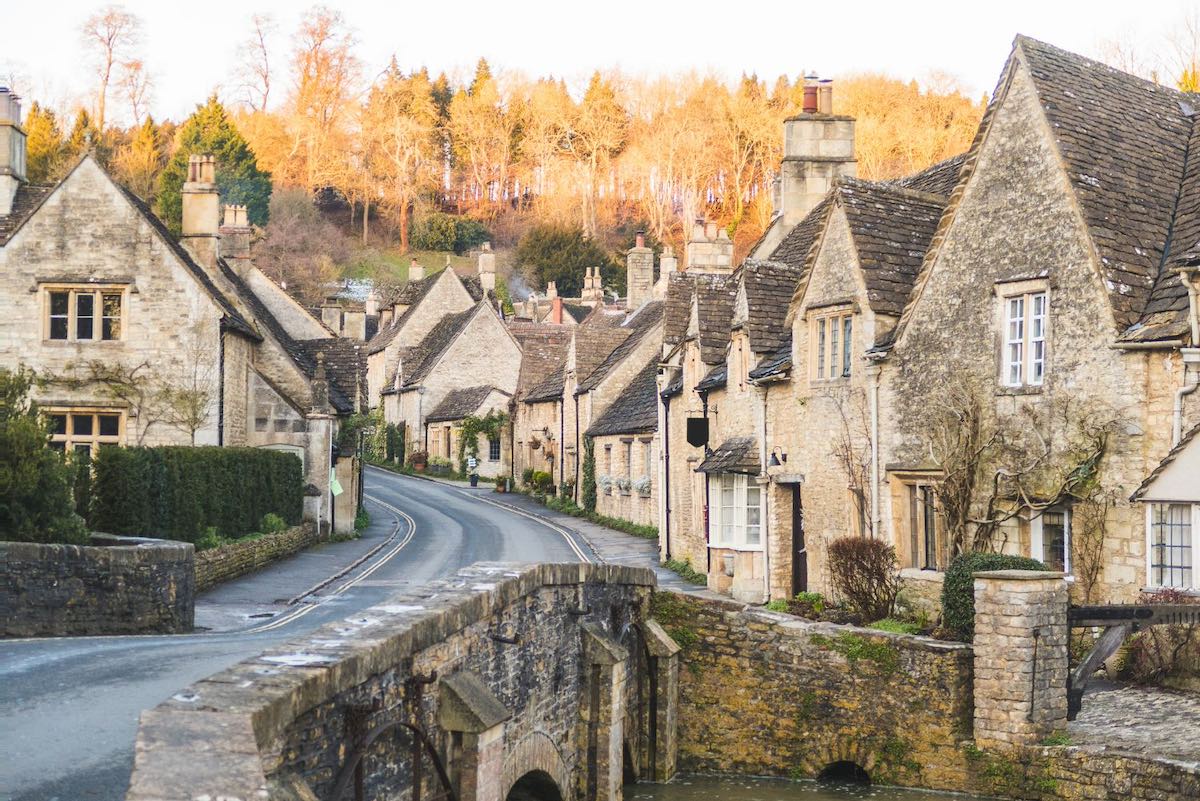
Its picturesque streets, lined with honey-coloured cottages, have made it a popular filming location for period dramas and films.
The Market Cross in the village centre dates back to the 14th century, while St Andrew’s Church houses one of the oldest working clocks in the country.
Despite its popularity, Castle Combe has managed to avoid commercialisation, maintaining its authentic charm.
Points of interest:
→ The Market Cross: Dates back to the 14th century
→ St Andrew’s Church: Houses one of the oldest working clocks in the country
→ The Bridge: A photogenic spot where two streams meet
✦ Photography advice: For the best light for photography, visit popular spots like Castle Combe or Bourton-on-the-Water in the early morning or late afternoon. You’ll avoid crowds and catch the golden hour light.
➡️ Book your stay at our top Castle Combe recommendation: The Manor House (rated Superb 9.0) for a lavish 5-star experience. ⬅️
6. Upper Slaughter
Despite its somewhat ominous name (which actually comes from the Old English word for ‘muddy place’), Upper Slaughter is a tranquil and idyllic village.

It’s one of the Cotswolds’ “Thankful Villages” – those rare communities that lost no men in World War I.
✦ Hidden walk: In Upper Slaughter, look for the footpath behind the church. It leads to a beautiful, lesser-known walk along the River Eye to Lower Slaughter.
The village centres around a square with a picturesque ford, where the River Eye flows across the road. Upper Slaughter Manor, a stunning Elizabethan manor house, is open to visitors on certain days.
The village’s unspoilt beauty makes it a perfect spot for a peaceful wander.
Points of interest:
→ The Square: A picturesque village centre with a ford
→ Upper Slaughter Manor: A stunning Elizabethan manor house
→ St Peter’s Church: A charming village church
Read more: 9 fantastic paddleboarding spots around the West Midlands
➡️ Staying in Upper Slaughter? we recommend the iconic, former 17th century manor Lords of the Manor (rated Exceptional 9.5) ⬅️
Driving through the Cotswolds?
Driving is easily the best and most convenient way to get around the Cotswolds, due to the large size of the region, and the poor public transport network in many of the rural towns and villages of the region.
If you don’t have your own car, your best bet is to hire a rental car – we recommend DiscoverCars for their transparency and positive reviews.
✦ Pub culture tip: Many village pubs in the Cotswolds are dog-friendly. If you’re travelling with a four-legged friend, look for pubs with ‘dogs welcome’ signs.
7. Lower Slaughter
Just a short walk from Upper Slaughter, Lower Slaughter is often considered one of the most romantic villages in the Cotswolds.

The village is built on both banks of the River Eye, with several small stone footbridges adding to its charm.
The Old Mill, complete with its original water wheel, now houses a museum and gift shop. Don’t miss the chance to try some locally made ice cream here.
The 13th-century Anglican Church of St. Mary is another notable landmark, surrounded by a traditional English churchyard.
Points of interest:
→ The Old Mill: Houses a museum and gift shop
→ Copse Hill Road: Often voted one of the most romantic streets in Britain
→ St Mary’s Church: A 13th-century Anglican church
→ The Slaughters Manor House: A 17th-century manor house, now a luxury hotel
Further reading: The Wrekin: Shropshire’s magnificent peak [guide]
➡️ Looking to Stay in Lower Slaughter? The Five Gold-Star awarded Slaughters Country Inn (rated Fabulous 8.7) is the one and only place to stay! ⬅️
8. Bibury
Described by William Morris as “the most beautiful village in England”, Bibury is a picture-perfect Cotswold village.

Its most famous attraction is Arlington Row, a group of weavers’ cottages built in the 14th century. These honey-coloured stone buildings, reflected in the waters of the River Coln, create a scene that’s almost too perfect to be real.
✦ Hidden gem in Bibury: While Arlington Row gets all the attention, take a peaceful walk along Awkward Hill for stunning views of the village and surrounding countryside.
Don’t miss the opportunity to visit the Bibury Trout Farm, one of Britain’s oldest working trout farms. Here, you can even catch your own lunch!
The nearby Church of St Mary is also worth a visit for its Saxon elements and medieval windows. Bibury, and the Cotswolds in general, consistently ranks among the ten best family day trips from Birmingham.
Points of interest:
→ Arlington Row: Iconic 14th-century weavers’ cottages
→ Bibury Trout Farm: One of Britain’s oldest working trout farms
→ Church of St Mary: Features Saxon elements and medieval windows
➡️ Stay in England’s most beautiful village: at the iconic, ivy-clad Swan Hotel (rated Fabulous 8.6) near the trout farm. ⬅️
✨ How to Explore the Villages, hassle-free
Connect the dots between picturesque but spread-out villages without the hassle of driving and parking. A guided walking tour lets you soak in the details you’d miss from a car. We recommend Macs Adventure for their highly-rated, detailed, customisable tours.
9. Tetbury
Tetbury, with its history as an important market town for the Cotswolds’ wool trade, boasts an impressive array of 16th and 17th-century buildings.

The Market House, built in 1655, stands as a testament to the town’s prosperous past and is still used for markets today.
Tetbury is known for its antique shops and is home to Highgrove, the private residence of King Charles III. While the house itself is not open to the public, you can book a tour of the beautiful gardens.
The Chipping Steps, a steep street lined with weavers’ cottages, provides a glimpse into the town’s historic character.
Points of interest:
→ Market House: A 17th-century pillared market house
→ Police Museum: Housed in the Victorian police station and courtroom
→ Highgrove Royal Gardens: The private residence of King Charles III (gardens open for tours)
✦ Local event tip: Time your visit to coincide with the Tetbury Woolsack Races in May. Watch participants carry heavy sacks of wool up and down one of the steepest streets in the Cotswolds.
➡️ Staying in Tetbury? The Royal Oak (rated Fabulous 8.6) is one of the cheapest places to stya in the Cotswolds! ⬅️
Want to explore the Cotswolds’ ancient long barrows, Roman villas, and medieval ruins?
With an English Heritage Visitor Pass, you can enjoy unlimited access to 15+ historic sites across the Cotswolds National Landscape, including:
→ Belas Knap Long Barrow (a 5,000-year-old Neolithic tomb)
→ Cirencester Amphitheatre (one of Britain’s largest Roman arenas)
→ Hailes Abbey (haunting 13th-century Cistercian ruins)
→ Minster Lovell Hall (a picturesque 15th-century manor by the River Windrush)
Your OS Explorer Map covers all these sites plus trails linking them – perfect for combining history with scenic walks. Save 10% versus individual tickets and discover the Cotswolds’ layered past at your pace.

Tip: Pair your pass with an OS Explorer Map to navigate between sites like the Rollright Stones and Great Witcombe Roman Villa with ease.
You may also like: 10 Superb family days out in the West Midlands
10. Stanton
Stanton is often overlooked by tourists, which only adds to its charm. This small village consists of a single street lined with beautiful Cotswold stone houses.

The lack of modern development means that Stanton has retained its authentic medieval character.
The village pub, The Mount, sits at the top of the village and offers stunning views over the Vale of Evesham. For walkers, Stanton is an ideal base, with several footpaths leading directly from the village into the surrounding countryside.
Points of interest:
→ St Michael’s Church: A beautiful parish church with Norman origins
→ The Mount Inn: A pub offering stunning views over the Vale of Evesham
→ Stanway House: A nearby Jacobean manor house with a spectacular fountain
✦ Off-season charm: Visit in winter to see the Cotswolds in a different light. The villages look magical under a dusting of snow, and you’ll have many places almost to yourself.
★ Fancy a day trip to the Cotswolds?
You can easily see the best of the Cotswolds on a guided day trip from London and other cities. Here are our recommended, popular day tours:
➤ Small group guided tour of the Cotswolds from London
➤ Day tour of the Cotswolds from Stratford-upon-Avon or Moreton-in-Marsh
➤ Small group, full-day tour of famous and hidden villages in the Cotswolds from Oxford
Read more: When’s the best time to visit the West Midlands?
11. Blockley
Blockley is a hidden gem that’s often missed by tourists rushing between the more famous Cotswold towns.

This village, with its steep hills and babbling brook, has a unique character shaped by its industrial past as a silk mill town.
The Norman church of St Peter and St Paul dominates the village skyline, while the community-owned shop and café serve as the heart of village life.
Blockley’s peaceful atmosphere and stunning surroundings make it an ideal base for exploring the northern Cotswolds.
Points of interest:
→ St Peter and St Paul Church: A Norman church dominating the village skyline
→ Blockley Village Shop & Café: A community-owned hub
✦ Transport hack: Consider using the Cotswolds Discoverer Pass for unlimited bus travel. It’s a cost-effective way to explore multiple villages without worrying about parking.
My Trusted Travel Gear for Cotswolds Trekking and Camping
Here’s a list of my most trusted travel gear that I’ve used in more than a decade of travel around the UK as well as abroad. I highly recommend these items for your visit to the Cotswolds – whether for walking, hiking or camping:
✅ Lifestraw Filter Water Bottle: Our go-to travel essential—it filters any water source to pure, clean drinking water while saving money and reducing plastic waste.
✅ Mens / Womens Patagonia Jackets: Versatile all-weather windbreakers that stay cool in summer and layer well in winter, combining style, comfort, and durability.
✅ Osprey Backpack: After a decade of testing, the 65L Osprey remains our top pick for reliability and longevity—worth the investment.
✅ Camping Essentials: Start with three basics—a budget-friendly tent (£99+), a sleeping bag, and a torch (£4+)—then add extras like a stove or chairs.
✅ Salomon Boots: Perfect for hikes or city walks, offering durability and comfort without bulk.
12. Painswick
Known as the “Queen of the Cotswolds”, Painswick is a town of winding streets and hidden courtyards.

Its churchyard, home to 99 meticulously trimmed yew trees (legend has it that the 100th will never grow), is a sight to behold.
The Rococo Gardens, the country’s only surviving complete Rococo garden, is a must-visit. These whimsical gardens offer a unique glimpse into 18th-century garden design.
Painswick is also an excellent base for walkers, with the Cotswold Way passing through the town.
Points of interest:
→ St Mary’s Church: Famous for its 99 yew trees in the churchyard
→ Rococo Garden: The country’s only surviving complete Rococo garden
→ Painswick Beacon: Offers panoramic views of the surrounding countryside
➡️ Book your stay at stunning The Painswick (rated Superb 9.3) with its rave reviews including “outstanding food” and “fantastic” ⬅️
You may also like: 6 Amazing Log Cabins with Hot Tubs in the Cotswolds
13. Winchcombe
Winchcombe, with its black and white half-timbered houses, offers a slightly different aesthetic to the typical Cotswold stone.

This ancient Saxon town is steeped in history, with Sudeley Castle on its doorstep. The castle, once home to Katherine Parr (Henry VIII’s last wife), boasts beautiful gardens and a fascinating exhibition.
The town is also known for its excellent walking trails, including the Cotswold Way and the Gloucestershire Way. After a day of exploration, relax in one of Winchcombe’s cosy pubs or fine dining restaurants.
✦ Local craft: Take a pottery class in Winchcombe, known for its pottery since medieval times. It’s a great way to create a personalised Cotswold memento.
Points of interest:
→ Sudeley Castle: Historic castle with beautiful gardens
→ Hailes Abbey: Ruins of a 13th-century Cistercian abbey
→ Winchcombe Railway Museum: Celebrates the town’s railway heritage
→ Belas Knap: A nearby Neolithic long barrow
Read: The best free things to do around the West Midlands
14. Cirencester
While technically a town rather than a village, Cirencester is often referred to as the “Capital of the Cotswolds” and is too significant to omit.
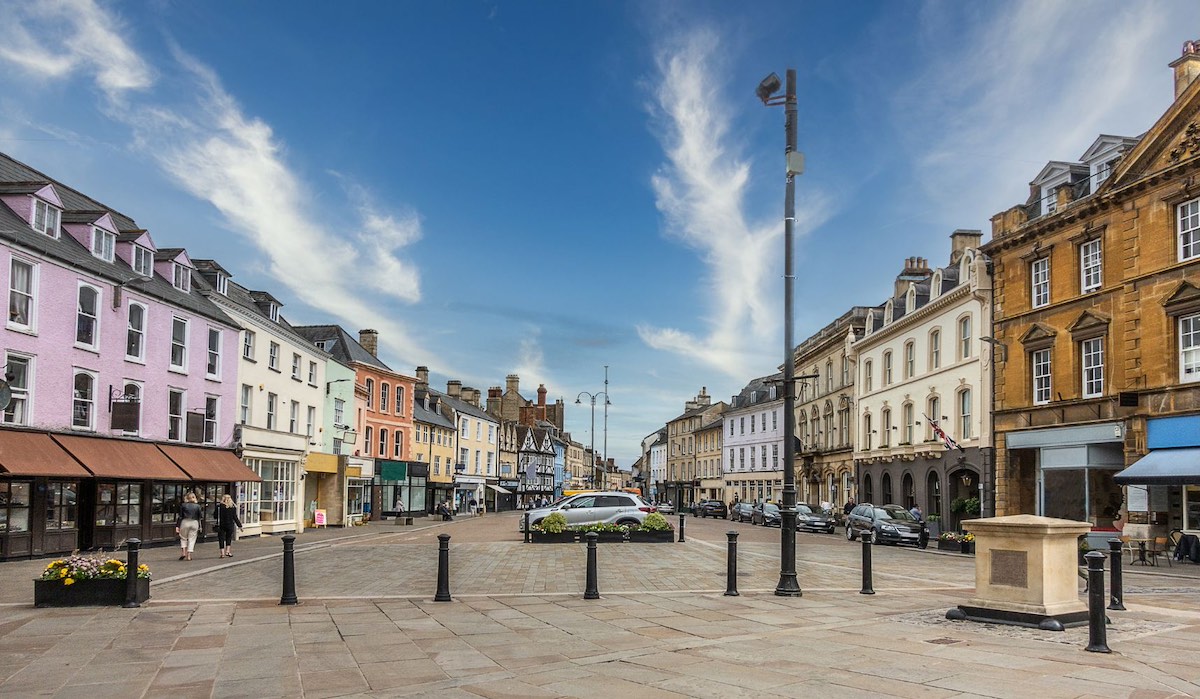
This former Roman city, known then as Corinium, was second only to London in size and importance.
Today, you can explore this rich history at the Corinium Museum, home to an extensive collection of Roman artefacts. The Parish Church of St John Baptist, one of the largest in England, dominates the town centre.
Cirencester also boasts excellent shopping, with a mix of independent boutiques and high street brands.
Points of interest:
→ Corinium Museum: Houses an extensive collection of Roman artefacts
→ Cirencester Park: A beautiful landscaped park open to the public
→ Cirencester Amphitheatre: Remains of one of the largest Roman amphitheatres in Britain
➡️ Where to stay around Cirencester
Cirencester is the other place I receommend staying in the Cotswolds due to its convenient location and amenities.
◉ This lovely Town Centre Apartment is fairly cheap and boasts a superb 9.4 rating
◉ If you’re looking for the absolute best, I can’t recommend enough the Pudding Hill Barn Cottage that has a perfect exceptional 10/10 rating!
See also: Royal market towns worth visiting in Staffordshire
15. Bradford on Avon
While technically just outside the Cotswolds, Bradford on Avon is worth a mention for its stunning beauty and rich history.

This town, straddling the River Avon, boasts a wealth of architectural treasures, from the Saxon St Laurence’s Church to the 14th-century Tithe Barn.
The town’s industrial past is evident in the old textile mills that line the river, many of which have been converted into stylish apartments and shops. For a unique experience, take a boat trip along the Kennet and Avon Canal, or explore the surrounding countryside on foot or by bike.
Points of interest:
→ The Tithe Barn: Stunning 14th-century medieval barn, one of the largest in England, located in the picturesque Barton Farm Country Park.
→ Town Bridge & Chapel: historic bridge with 13th-century arches, featuring a unique former chapel that once served as the town lock-up.
→ St Laurence Church: One of the most complete Anglo-Saxon churches in England, rediscovered in the 19th century after being hidden for generations.
✦ Local delicacy: Don’t leave the Cotswolds without trying a slice of Lardy Cake, a traditional sweet bread that’s a local favourite. The best ones can be found in small, family-run bakeries.
Further reading: Royal Market Towns of Shropshire [Insiders Guide]
3-Day Cotswolds Itinerary: West Midlands to Bath
– Day 1: Stratford-upon-Avon to Chipping Campden –
Begin your journey in Shakespeare’s Stratford-upon-Avon (easily accessible from Birmingham). Spend the afternoon walking the first 3 miles of the Cotswold Way to Broadway Tower, enjoying panoramic views across the hills. The trails are moderately challenging but suitable for most visitors.
After picking up your OS Explorer Map, drive 30 minutes to Chipping Campden, the northern gateway to the Cotswolds National Landscape. Lose yourself in Chipping Campden’s breathtaking High Street, widely regarded as one of England’s most outstanding examples of medieval architecture.
Stay: Eight Bells Inn – a 14th-century pub with charming rooms and local ales.
– Day 2: Bourton-on-the-Water to Stow-on-the-Wold –
Morning:
Explore Bourton-on-the-Water‘s famous model village and the gardens of the Dragonfly Maze, one of the region’s best outdoor mazes.
★ Why not try a distillery tour with whisky and gin tasting?
The Cotswolds is famously home to one of England’s oldest distilleries – learn what goes into the spirits, blend your own gin, and if you’re driving, you can even take your tastings away until you’re back at home / the hotel. Book your tour HERE:
Afternoon:
Hike 4 miles along the River Eye to Stow-on-the-Wold, stopping at picture-perfect Lower Slaughter (voted one of England’s prettiest villages). The route follows gentle trails through classic Cotswolds landscape.
Stay: The Old Stocks Inn – a luxury boutique hotel with spa facilities.
– Day 3: Painswick to Bath –
Morning:
Spend an hour or two walking around Painswick’s Rococo Gardens, one of the National Trust’s most unique properties.
Afternoon:
Drive along the Cotswold Escarpment to Bath, stopping at Westonbirt Arboretum if time allows. The course of this journey takes you through some of the region’s most spectacular landscape.
If you have more time, consider a romantic rowboat private picnic for two on the River Thames for something truly unique!
★ Be sure to read our Detailed 3-Day Cotswolds Itinerary here for everything you need to know for the perfect, seamless trip that avoids the crowds and backtracking on routes! ★
Further reading: Warwickshire Maps (Free PDFs)
16. Snowshill
Tucked away in a secluded valley, Snowshill is a hidden gem that feels untouched by time. The village is home to Snowshill Manor, a National Trust property famous for its eclectic collection of objects amassed by Charles Wade.

The manor’s gardens are equally impressive, offering a tranquil retreat.
In summer, the surrounding lavender fields paint the landscape in shades of purple, creating a truly magical scene. Despite its small size, Snowshill offers a quintessential Cotswolds experience away from the usual tourist trails.
✦ Unique souvenir: Pick up some locally produced lavender products from Snowshill Lavender. The farm’s gift shop offers everything from essential oils to lavender-infused fudge.
Points of interest:
→ Snowshill Manor: A National Trust property with an eccentric collection
→ Snowshill Lavender: Beautiful lavender fields and a distillery
→ St Barnabas Church: A charming 19th-century church
→ Cotswold Way: Passes near the village, offering excellent walking opportunities
17. Burford
Often called the “gateway to the Cotswolds”, Burford is a medieval town with a broad main street that sweeps downhill towards the River Windrush.

This street is lined with ancient houses, old pubs, and charming shops, offering a snapshot of Cotswold life through the centuries.
The 15th-century parish church of St John the Baptist is worth a visit for its impressive architecture and the intriguing story of the Levellers, a group of mutineers from Cromwell’s army who were imprisoned here.
Don’t miss the chance to explore the many antique shops and art galleries that Burford is known for.
Points of interest:
→ St John the Baptist Church: A 15th-century parish church with an impressive interior
→ Tolsey Museum: Housed in a Tudor building, showcasing local history
→ Burford Garden Company: Much more than a garden centre, it’s a local attraction
✦ Accommodation secret: For a unique stay, look into renting a converted church or chapel. Several of these atmospheric properties are available as holiday lets throughout the Cotswolds.
What is the most beautiful village in Cotswold?
Beauty is subjective, but Castle Combe is often cited as the most beautiful Cotswold village. Its unspoilt stone cottages, babbling brook, and picturesque bridge create a scene that seems straight out of a postcard. However, Bibury, with its famous Arlington Row, is a close contender.
What are the main towns in the Cotswolds?
The main towns in the Cotswolds include Cirencester, Stroud, Tewkesbury, Cheltenham, and Gloucester. These larger settlements offer a range of amenities and serve as gateways to the smaller villages. Each has its own unique character and attractions, from Roman ruins to Regency architecture.
What is the best village to stay in the Cotswolds?
For a central location with plenty of amenities, Bourton-on-the-Water is an excellent choice. It’s beautiful, well-connected, and offers a range of accommodation options. However, for a quieter stay, consider Stow-on-the-Wold or Chipping Campden, both of which offer charm and good access to other Cotswold attractions.
What is the best village to use as base in the Cotswolds?
Burford makes an excellent base for exploring the Cotswolds. It’s centrally located, has good transport links, and offers a range of accommodation and dining options. From here, you can easily reach both the northern and southern parts of the Cotswolds, as well as nearby attractions like Blenheim Palace.
What’s the nicest part of the Cotswolds?
The northern Cotswolds, including villages like Broadway, Chipping Campden, and the Slaughters, is often considered the nicest part. This area boasts some of the most picturesque villages and landscapes. However, the southern Cotswolds, with towns like Tetbury and Malmesbury, has its own unique charm and fewer tourists.
Map of Cotswolds Villages
Have a look at the interactive map of the Cotswolds villages and towns featured in this article. Zoom in and see more info on each place.
Plan Your Perfect Cotswolds Trip
Your maps are sorted! Now, use our detailed guides to build the rest of your itinerary:
➡️ Your Complete Itinerary: Follow our step-by-step guide for the perfect Cotswolds 3-Day Itinerary, designed to show you the very best of the region.
➡️ Where to Stay: Dive deep into our curated list of the 8 Best Hotels in the Cotswolds for every budget.
➡️ Find Your Cabin: Ready to book your escape? Explore our curated guide to the Best Log Cabins with Hot Tubs in the Cotswolds.
➡️ Free Cotswolds Maps: To help you visualise your journey and locate all these spots, be sure to bookmark our central Cotswolds Maps page.
➡️ How to Get Around: Everything you need to know about Driving in the Cotswolds, including tips for narrow lanes and parking.
➡️ Where to Eat & Drink: Experience local flavour at the finest Cotswolds Pubs, from rustic inns to gastro pubs, and make sure you read our guide to the best Afternoon Tea in the Cotswolds.
Download your FREE Cotswolds PDF Packing List Here
This list features our recommendations on what to pack for the Cotswolds in each season, with only the most trusted travel gear that we’ve used for years (plus some things that most tourists forget too!)

Final Tips for Your Cotswolds Trip
✅ Purchase a laminated OS Explorer Map if you plan serious walking – the weather can change quickly in this landscape.
✅ The OS Maps App (50% off here) provides excellent real-time directions across all trails with the location of most popular and hidden gem attractions
✅ Respect the wildlife – stick to marked trails and rely on the Countryside Code.
✅ Consider visiting in shoulder seasons (April-May or September-October) to avoid crowds.
✅ Combine your trip with visits to nearby regions like the Wales border or Oxford for extended exploration.


