
The Ultimate 3-Day Cotswolds Itinerary (2026): Hidden Gems & Most Efficient Routes

LOOKING FOR THE PERFECT 3 DAY COTSWOLDS ITINERARY? WE’VE GOT YOU COVERED!
Having spent many a weekend scouring every hidden lane and secret viewpoint across the Cotswolds over the past few years, I’ve learned that timing, route planning, and local knowledge make all the difference between a good trip and an unforgettable one.
This carefully designed itinerary distills years of local expertise into the perfect three-day experience that covers the must-see highlights whilst avoiding unnecessary backtracking and tourist traps.
TRIP AT A GLANCE SUMMARY:
✪ Best Way to Travel: Car essential (rental from £25/day)
✪ Total Distance: ~120 miles over 3 days
✪ Accommodation: Broadway (luxury) or Bourton-on-the-Water (central)
✪ Must-Do Highlights: Broadway Tower sunrise, Arlington Row golden hour, Slaughters village walk (book private tours here)
✪ Daily Budget: £80-150 per person (including meals, parking, attractions)
✪ Essential Apps: Cotswolds AONB app, RingGo parking, OS Maps App, What3Words for precise locations
✪ Optimal Timing: May-Sept for best weather, April & Oct for fewer crowds
✪ Pack Essentials: Waterproof jacket, comfy walking shoes, cash for parking
✪ Signal Warning: Patchy mobile coverage in villages – download offline maps
✪ Avoid: Tour bus hours (11am-3pm), Sunday evening M40 traffic, village centres during school runs
DAY 1: NORTHERN COTSWOLDS – BROADWAY & CHIPPING CAMPDEN
Morning – Broadway (9:00am – 12:30pm)
Start your Cotswolds adventure in “The Jewel of the Cotswolds”
Begin your Cotswolds journey in Broadway, a village that truly lives up to its reputation as the crown jewel of this spectacular region. The secret to enjoying Broadway lies in timing – arrive early to experience its magic before the tourist coaches arrive.
If you’re staying at our recommendation the Broadway Hotel, you’re based right in the centre of town on Broadway’s spectacular High Street. This wide and magnificent tree-lined avenue showcases an incredible collection of antique shops and art galleries housed within buildings that span centuries of architectural history.
✨ Top Tip: The early morning light creates the most stunning photographs of Broadway’s honey-coloured stone buildings!


The seamless blend of Tudor, Stuart, and Georgian styles, all crafted from that distinctive warm Cotswold stone, depicts a scene that feels almost too perfect to be real. Some of our fave spots here include a cute little lifestyle shop called “Whatever the Weather” that stocks wonderful gifts and souvenirs.
Drop by The Broadway Museum & Art Gallery (open 10am to 4pm daily except Sundays) to learn the town’s fascinating history and try your hand at churning grass-fed butter.
Next, make the short drive to Broadway Tower, the highest viewpoint in the whole Cotswolds region. On those crystal-clear days, the panoramic vistas stretch across three counties, hitting you with the most breathtaking views.
✨ Good to know: there’s a large, reasonably-priced Pay & Display car park on site, (use PayByPhone App, code: 804760) that also has a cafe and accessible public toilets. After paying for parking, walking around the tower grounds is free, though there is a £12 fee to enter and climb the tower.


✨ Fun Fact: Broadway Tower was built as a folly in 1798 and stands as the second-highest point in the Cotswolds at 1,024 feet above sea level!
Related post: Cotswolds Maps: Free Downloadable PDFs

✨ Did you know: The red deer is one the largest species of deer. The herd at Broadway, established in the early to mid-1980s, consists of around eighteen hinds (females), and a single stag (male) named William, after William Morris.
Return to Broadway village with enough time to savour a coffee at Guilt Trip Broadway and explore the many independent boutiques before the afternoon crowds descend. We stopped by Cotswolds Trading, which does a great selection of must-have homeware and gifts, and also Broadway Deli, which puts on a delicious delicatessen!
✨ Heads up: Waterproof footwear is essential, as the trial tends to become muddy especially when it rains. We love our trusty Salomon Boots for hikes and village walks, for their durability and comfort without bulk.


✨ How to Explore the Villages, hassle-free
Connect the dots between picturesque but spread-out villages without the hassle of driving and parking. A guided walking tour lets you soak in the details you’d miss from a car. We recommend Macs Adventure for their highly-rated, detailed, customisable tours.
Lunch & Afternoon – Chipping Campden (12:30pm – 6:00pm)
Journey 10 minutes to the perfectly preserved medieval wool town
Your next stop is Chipping Campden, a remarkably well-preserved medieval market town that feels like stepping back in time. The short 4-mile drive from Broadway takes you through some of England’s most stunning countryside.
On arrival head straight to Market Square car park where is £1 for 1 hour, £2 for 2 hours, and puts you just a two-minute stroll from the historic High Street.

Should you rent a car?
The best way to get around the Cotswolds is by car, for flexibility, speed and comfort. If you don’t have your own car, we highly advise renting a car. Our go-to site is DiscoverCars – we’ve used them at home and abroad for years, and we like their transparency, great reviews, and easy-to-use site.
Read our full guide with our top tips on driving in the Cotswolds here:
Lunch Options: Treat yourself to a lovely meal at the outstanding The Eight Bells Inn on Church Street for hearty traditional pub grub within the atmospheric walls of a genuine 14th-century building. For fine dining, The King’s Head Inn does elegant cuisine that you can enjoy in a delightful courtyard garden setting.
After lunch, wander down Chipping Campden’s photogenic High Street, widely touted as one of England’s most outstanding examples of medieval architecture. The impeccably preserved limestone buildings captivate, perfectly embodying everything magical about Cotswolds architecture.

✨ Must-See: Don’t miss the magnificent St James’ Church, boasting one of the finest 15th-century interiors you’ll find anywhere in the Cotswolds. Entry is free, and the church’s impressive 120-foot tower creates a dramatic silhouette against the sky and serves as a landmark visible from miles around.
Download your FREE Cotswolds PDF Packing List Here
This list features our recommendations on what to pack for the Cotswolds in each season, with only the most trusted travel gear that we’ve used for years (plus some things that most tourists forget too!)

Next make a visit to the historic Market Hall, built in 1627 specifically for the wool merchants who brought prosperity to this region. Today, it’s surrounded by delightful independent shops where you can discover unique Cotswolds souvenirs and locally crafted items.

✨ Top Tip: Save time for a gentle evening stroll through the town as the day winds down. The golden hour lighting transforms the honey-stone buildings into something truly magical, creating the perfect ending to your first day in the Cotswolds.
Read more: National Trust vs English Heritage: Which one is best?
Evening & Accommodation
For your overnight stay, we recommend The Broadway Hotel (rated Fabulous 8.9) for a luxurious experience, or opt for The Crown & Trumpet Inn (rated Good 7.8) if you prefer character and charm at a more budget-friendly price point.
Struggling to choose where to stay? Our Cotswolds Hotels & Strategic Maps Guide‘s got you covered!
What We Learnt – Day 1
▶︎ Broadway High Street can get absolutely rammed with tour buses between 11am-3pm, so visit early morning or late afternoon for the best photos without crowds.
▶︎ Many shops close early on Sundays or are closed entirely, so plan accordingly.
▶︎ Both villages are incredibly dog-friendly, and you’ll see lots of locals out walking their pups along the streets.
DAY 1 HIDDEN GEMS / PHOTO SPOTS:
Morning – Broadway
Instagram Spot:
➡️ Broadway High Street – The wide, honey-stone street lined with antique shops is perfect for symmetrical shots.
➡️ Broadway Tower – For panoramic views across 16 counties (best at sunrise/sunset).
Hidden Photo Gem:
➡️ Snowshill Lavender Fields (10 min drive from Broadway) – Visit in July for purple waves of lavender (GPS: 52.0063, -1.8666).
Lunch & Afternoon – Chipping Campden
Instagram Spot:
➡️ Chipping Campden Market Hall – The 17th-century limestone arches frame rustic shots.
➡️ St James’ Church Tower – Climb for aerial village views (rarely crowded).
Hidden Photo Gem:
➡️ Hidcote Manor Gardens (5 min drive) – Secret garden “rooms” with vibrant floral backdrops (National Trust property)
★ Fancy a guided tour of Northern Cotswolds?
If you’d prefer to have an experienced local guide show you all the highlights of the northern Cotswolds, this private guided tour is perfect – taking you off-the-beaten track in a luxury Mercedes, you get VIP treatment and total peace of mind. Book your tour HERE:
Related: 17 Must-Visit Cotswolds Villages
DAY 2: CENTRAL COTSWOLDS – STOW-ON-THE-WOLD, THE SLAUGHTERS & BOURTON-ON-THE-WATER
Morning – Stow-on-the-Wold (9:00am – 11:30am)
Explore the historic wool market town
Begin your second day with an early morning journey to Stow-on-the-Wold, a historic market town that once served as one of England’s most important wool trading centres.

Park at the main market square car park (free parking) and step directly into the heart of the historic market square, surrounded by antique shops, galleries, and cosy pubs.
Head for breakfast or brunch at The Hive or The Old Bakery Tea Rooms – both excellent choices. Alternatively get yourself a coffee and traditional Cotswolds lardy cake at the local Huffkins Bakery, baking since 1890.
The town’s crown jewel is St Edward’s Church, featuring the famous door flanked by ancient yew trees that form a natural archway. Local legend suggests that J.R.R. Tolkien drew inspiration from this mystical entrance when creating the doors of Moria in The Lord of the Rings!


✨ Top Tip: The church and its remarkable yew tree entrance make for incredibly atmospheric photographs, especially in the golden morning light.
Stow-on-the-Wold is a paradise for antique lovers, with fantastic shops lining Sheep Street and Park Street. You’ll discover everything from vintage jewellery to proper English china, making it the perfect place to discover unique Cotswolds souvenirs.
★ Why not try a distillery tour with whisky and gin tasting?
The Cotswolds is famous for its whisky distilleries – learn what goes into the spirits, blend your own gin, and if you’re driving, you can even take your tastings away until you’re back at home / the hotel. Book your tour HERE:
Mid-Morning – Upper and Lower Slaughter (11:30am – 2:30pm)
Visit England’s most beautiful villages before the crowds arrive
Your journey continues to what many consider the crown jewels of the Cotswolds – the enchanting twin villages of Upper and Lower Slaughter. Despite their odd names, these villages are the complete opposite of what you might expect, offering some of the most peaceful and picturesque scenery in all of England.
✨ Fun Fact: The name “Slaughter” actually derives from the Old English word “slohtre,” meaning muddy place or marsh, referring to the gentle River Eye that meanders through both villages.
Begin in Upper Slaughter, where parking is free but extremely limited along the village roads. There’s no official car park, so keep in mind the residents who call this special place home when you park here.

This tiny hidden gem remains refreshingly uncommercialised, purely a quiet residential village with no tourism infrastructure – and that’s what truly makes it so magical and a rare escape.
✨ Top Tip: Upper Slaughter earned itself the remarkable distinction of being a “Double Thankful Village,” as it lost no residents during both World Wars – a rare and moving testament to this community’s fortunate history.
You may also like: 10 Best Family Day Trips from Birmingham
The village really does feel like stepping into a storybook, with every corner offering another picture-perfect scene.
The highlight of Upper Slaughter is undoubtedly the famous ford at the bottom of a gentle hill, where the River Eye creates an insta-worthy crossing that photographers dream of capturing.

✨ Did you know: Upper Slaughter hosts an annual Summer fete around July along the River Eye ford – a free event featuring river races, bouncy castles, BBQ food, drinks, live music, and games. It’s been lovingly nicknamed “The Most Quintessential of Village Fetes.”
From Upper Slaughter, embark on one of England’s most photogenic walks – the gentle 30-minute riverside stroll to Lower Slaughter through quintessential English countryside. This scenic route follows the babbling River Eye and showcases the very best of Cotswolds natural beauty.


Lower Slaughter, the slightly larger of the two villages, welcomes you with its quaint charm divided by the gently flowing River Eye. Here you’ll discover the humble Old Mill with its working waterwheel and fascinating small museum.
The mill’s charming tea room serves excellent cream teas if you fancy a sweet mid-morning treat while soaking in the peaceful atmosphere before the afternoon crowds arrive.
✨ Top Tip: Both the Slaughters Manor House (rated Very Good 8.1) and The Slaughters Country Inn (rated Fabulous 8.7) offer luxurious 5-star accommodation if you’re tempted to extend your stay in this magical setting!

Dining Options: For lunch, head into Bourton-on-the-Water where The Rose Tree Restaurant serves excellent traditional British fare, or grab delicious fish and chips from The Mousetrap Inn to enjoy by the riverside.
Afternoon – Bourton-on-the-Water (2:30pm – 5:30pm)
Experience “The Venice of the Cotswolds”
Your afternoon begins in Bourton-on-the-Water, affectionately known as “The Venice of the Cotswolds.” This picturestamp village is one of the largest in the region, charmingly centered around the gentle maundering River Windrush that flows through the heart of the village.

✨ Fun Fact: Bourton-on-the-Water is thought to be one of the most visited villages in the entire Cotswolds region!
Upon arrival, head to Pay & Display car park (RingGo App code: 41644) (£3.50 for 2 hours) and places you right in the village centre.
The village’s main attraction is undoubtedly the series of low stone bridges spanning the River Windrush, creating those iconic postcard scenes that have made Bourton-on-the-Water famous worldwide.
You can easily spend hours exploring the main street, criss-crossing these idyllic small river bridges and venturing into the hidden shops tucked away on the residential outskirts.
✦ Quirky attraction: For an alternative fun family activity, we recommend a visit to the Dragonfly Maze – one of the best Outdoor Mazes in the Midlands. It’s not just a maze, but a puzzle too – see if you can find the golden dragonfly at the centre!


Must-Do Activities in Bourton-on-the-Water:
☑️ Visit the fascinating Model Village (£4.75) – a one-ninth scale replica of Bourton-on-the-Water itself, complete with a model of the Model Village inside! It’s wonderfully quirky and surprisingly detailed.
☑️ Explore the Motoring Museum and Toy Collection, which houses an incredible collection including the beloved yellow car “Brum” from 1990s UK television.
☑️ Browse the unique pieces at the Cotswold Pottery shop for authentic local crafts.
☑️ For families, Birdland Park & Gardens offers a delightful experience with over 500 bird species and a discovery centre for children.
☑️ The Dragonfly Outdoor Maze is the perfect activity for kids on a nice day.
Related post: 16 Historic Family Friendly Pubs in the Cotswolds
Evening & Accommodation
We stayed at famous The Porch House (Fabulous 8.6) and cannot recommend it enough – not only is it cosy, does fine dining, and is one of the top pubs in the Cotswolds, its officially the Oldest Inn in England, dating back to 947AD!

Looking for the Best Cotswolds hotels? Here’s my top picks:
✳️ For First Timers: The Porch House, Stow (Fabulous 8.6) Sleep in England’s oldest inn, with cosy rooms and a fabulous pub.
✳️ For a Romantic Escape: Lords of the Manor, Upper Slaughter (Exceptional 9.5) Stunning country house set in 8 acres of grounds. Ultimate luxury splurge.
✳️ For Walkers & Explorers: The Painswick (Superb 9.3) Stylish, vibrant hotel with stunning valley views. Step right onto the Cotswold Way from your doorstep.
For a truly unique stay or the perfect romantic getaway: check out our Top Cotswolds Log Cabins with Hot Tubs guide
What We Learnt – Day 2
▶︎ The Slaughters have virtually no facilities (no shops, pubs, or cafes in Upper Slaughter), so bring water and snacks if needed.
▶︎ Bourton-on-the-Water gets absolutely heaving on summer weekends – arrive before 10am or after 4pm to avoid the worst crowds.
▶︎ The river is only about 2 feet deep in most places, so it’s safe for children to paddle, but do watch for slippery stones.
▶︎ Many attractions offer combo tickets if you’re visiting multiple places – ask at the first place you visit.
▶︎ Parking fills up quickly in both villages, especially at weekends, so have backup car parks in mind.
DAY 2 HIDDEN GEMS / PHOTO SPOTS:
Morning – Stow-on-the-Wold
Instagram Spot:
➡️ St Edward’s Church Door – The ancient yew-tree-flanked door inspired JRR Tolkien.
➡️ Market Square Stocks – Quirky historic prop for playful photos, formerly penal stocks from the 15th century.
Early Afternoon – Upper & Lower Slaughter
Instagram Spot:
➡️ Lower Slaughter Mill – The waterwheel and ivy-clad stone make a fairy-tale scene.
➡️ Slaughter Brook Reflections – Shoot at the bend near Upper Slaughter (GPS: 51.9018, -1.7662) for mirror-like water.
Hidden Photo Gem:
➡️ The Hollow Bottom Pub (Guiting Power) – A 16th-century inn with a hidden garden (GPS: 51.9286, -1.8568)
Late Afternoon – Bourton-on-the-Water
Instagram Spot:
➡️ Sherborne Street Bridges – The “Venice of the Cotswolds” with stone arches and ducks.
➡️ Model Village – Fun forced-perspective shots with mini cottages.
Hidden Photo Gem:
➡️ Dover’s Hill Sunrise Perch (15 min drive) – Panoramic Vale of Evesham views
Further reading: Shropshire’s Royal Market Towns (Guide)
DAY 3: SOUTHERN COTSWOLDS – BIBURY, CIRENCESTER & SCENIC FINALE
Morning – Bibury (9:00am – 12:00pm)
Visit William Morris’s “most beautiful village in England“
Your final day in the Cotswolds begins with a visit to Bibury, the village that captured the heart of Victorian designer William Morris, who famously declared it “the most beautiful village in England.” This enchanting destination has been captivating visitors for over a century, and stepping into Bibury feels like entering a living postcard.

The 25-minute drive to Bibury takes you through some of the most spectacular countryside in the region. Upon arrival, you have parking options at Bibury Court Hotel car park (£5 all day) or along the B4425 for free, though spaces are extremely limited and fill up quickly.
✨ Top Tip: Arrive early to secure the best parking spots and to experience Arlington Row in the magical morning light when the honey-coloured stone practically glows!
Your first destination is the legendary Arlington Row – those iconic 14th-century weavers’ cottages that have graced countless postcards and calendars worldwide.
These impossibly picturesque cottages, with their perfectly preserved honey-coloured Cotswold stone and traditional steep-pitched roofs, create one of the most photographed scenes in all of England.
The morning light transforms these ancient buildings into something truly magical, making every photograph look like a professional masterpiece.

✨ Fun Fact: Arlington Row was originally built as a monastic wool store in 1380, later converted to weavers’ cottages in the 17th century. Today, these remarkable buildings remain fully occupied homes, making them living pieces of history!
After capturing the perfect photograph, explore St Mary’s Church, where history spans over a millennium. Parts of this remarkable church date back to Saxon times, offering a fascinating glimpse into England’s ancient past.
The Norman doorway stands as a testament to medieval craftsmanship, while the medieval wall paintings provide stunning examples of religious art from centuries past.
✨ Top Tip: The church is usually quiet in the morning, allowing you to fully appreciate its historical significance and peaceful atmosphere.
Read also: English Heritage Membership: the Pros and Cons


For your final morning activity, choose between visiting the Bibury Trout Farm (£9 adults), which has been operating since 1902 and gives a fascinating glimpse into traditional English fish farming, or take a peaceful walk along the River Coln behind Arlington Row.
The crystal-clear chalk stream provides perfect opportunities for spotting brown trout darting through the pristine waters.
★ Fancy a Romantic River Picnic Tour?
Near to Bibury is this highly-rated, romantic rowboat picnic tour – perfect for couples looking for a truly unique experience!
See also: Warwickshire Maps [Free PDF Downloads]
Lunch & Afternoon – Cirencester (12:00pm – 4:00pm)
Explore the “Capital of the Cotswolds”
Your afternoon adventure takes you to Cirencester, proudly known as the “Capital of the Cotswolds.” This historic market town boasts an incredible heritage as the second-largest city in Roman Britain, where ancient history seamlessly blends with modern charm.
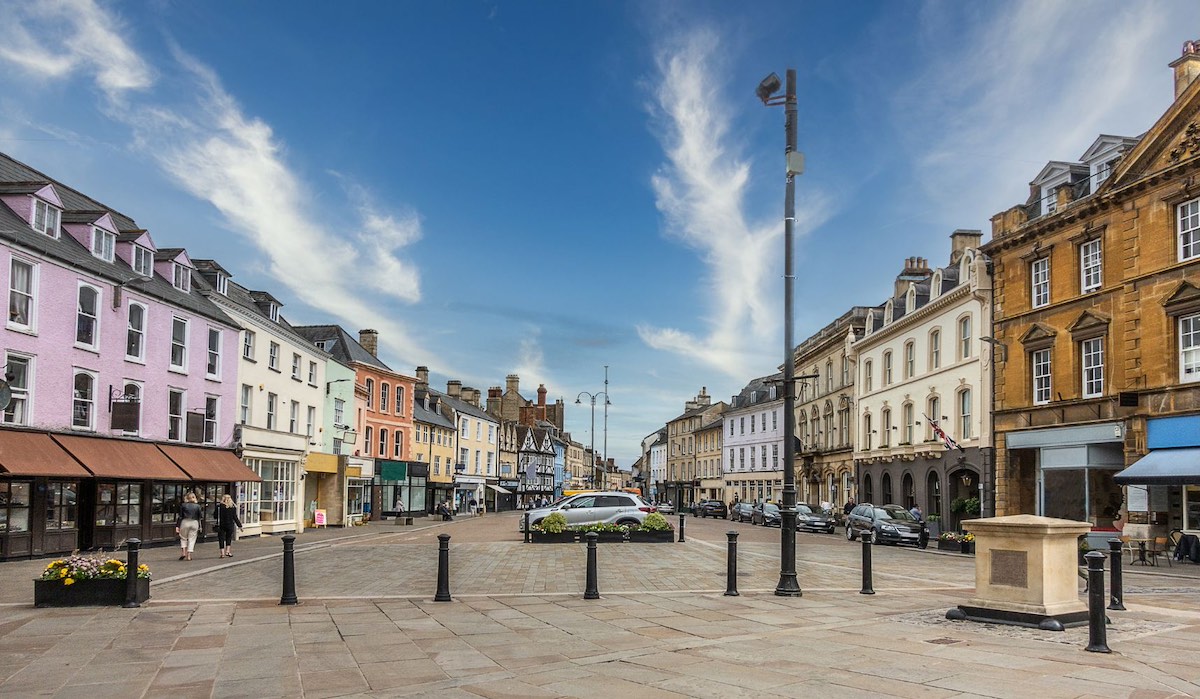
The 20-minute drive to Cirencester offers lovely countryside views as you transition from the intimate village atmosphere of Bibury to the bustling energy of this important Cotswolds hub. Park at Waterloo car park (£2 for 1 hour, £3.50 for 2 hours) for convenient access to all the town’s attractions.
✨ Tip: On Saturdays, Sundays and Bank Holidays you can park for free all-day at the Cotswolds District Council car park. There is also free parking on Cricklade Street.
Dining: Begin your Cirencester experience with lunch at The Fleece Hotel, a historic coaching inn serving exceptional local fare in atmospheric surroundings.
After lunch, immerse yourself in Cirencester’s architectural magnificence by visiting St John the Baptist Church – the largest parish church in Gloucestershire. This awe-inspiring building dominates the town’s skyline with its impressive 15th-century tower, and stepping inside reveals centuries of breathtaking craftsmanship and devotion.

✨ Must-Visit: The Corinium Museum (£8.40 adults, £3.90 kids) offers an extraordinary journey through time, showcasing some of Britain’s finest Roman mosaics and revealing Cirencester’s fascinating role as Roman Corinium Dobunnorum. The collection brings ancient history to life, making it easy to imagine the bustling Roman city that once thrived here.
Complete your Cirencester exploration with a peaceful stroll through the 3,000-acre Cirencester Park featuring the famous tree-lined Broad Avenue. This grand avenue, stretching for miles through ancient woodland, provides the perfect setting for a gentle walk and offers a tranquil escape from the town’s busier streets.
✨ Did you know: Cirencester was once the second-largest city in Roman Britain, serving as the capital of the Dobunni tribe and a crucial military and administrative centre!
See also: 10 Top Paddleboarding Spots in the West Midlands
Scenic Drive & Departure (4:00pm onwards)
Your Cotswolds adventure concludes with a choice of scenic routes, each offering its own unique farewell to this magical region.
Option 1: Tetbury & M4 Return (Fastest Route)
For those seeking efficiency without sacrificing charm, drive 20 minutes to Tetbury, renowned for its exceptional antique shops lining Long Street and Castle Street. Be sure to catch an epic shot at the bottom of the Chipping Steps before sunset.


This elegant market town provides the perfect opportunity for final souvenir shopping among England’s finest antique dealers. The quality and variety of treasures here are exceptional, making it an ideal place to find that perfect memento of your Cotswolds journey.
Depart for London via the M4 motorway (1.5 hours) with your new treasures and unforgettable memories.
Read more: 10 Top-Rated Family Days Out in the West Midlands
Option 2: Painswick & Devil’s Chimney (Most Scenic)
For the most spectacular finale, choose the scenic route to Painswick, driving 25 minutes through some of the most breathtaking countryside in the Cotswolds.
Stop by for a stroll around the majestic Rococo Gardens (£12 entry) before heading to the Devil’s Chimney viewpoint – a dramatic limestone pinnacle offering panoramic views across the Severn Vale that will take your breath away. This geological wonder provides the perfect dramatic ending to your Cotswolds adventure, with views stretching to the horizon on clear days.


✨ Top Tip: The Devil’s Chimney viewpoint is particularly spectacular in the golden hour light, creating the perfect photographic farewell to your Cotswolds journey!
Return via the M4 or A419 (1.5-2 hours depending on your chosen route), carrying with you the image of the Cotswolds spread out below like a patchwork quilt.
Option 3: Extended Trip to Bath
For those who can’t bear to leave the region just yet, continue your adventure with a 45-minute drive to Bath from Cirencester.
This UNESCO World Heritage city offers a perfect extension to your trip, where Georgian architecture and Roman heritage create another chapter in your English countryside adventure.
✨ Fun Fact: Bath’s honey-coloured Bath stone creates a visual connection to the Cotswolds, making it feel like a natural extension of your journey through England’s most beautiful countryside!
Bath’s elegant crescents, Roman baths, and vibrant cultural scene provide a sophisticated conclusion to your Cotswolds experience.
What We Learnt – Day 3
▶︎ Cirencester market runs on Mondays and Fridays – great for local produce and crafts.
▶︎ The walk to Devil’s Chimney involves crossing active farmland – keep dogs on leads and follow footpath signs carefully.
▶︎ Painswick gets very busy during snowdrop season (February) – book accommodation well in advance.
▶︎ Tetbury’s antique shops can be expensive, but the quality is exceptional – perfect for special purchases.
▶︎ Thursday is market day in Tetbury, adding extra character but also more crowds and limited parking.
▶︎ The drive from Tetbury to London can be slow on Friday afternoons – plan your departure accordingly.
DAY 3 HIDDEN GEMS / PHOTO SPOTS:
Morning – Bibury
Instagram Spot:
➡️ Arlington Row at Sunrise – Arrive by 7:30am to avoid crowds at the iconic weavers’ cottages.
➡️ Bibury Trout Farm – Long-exposure shots of the crystal-clear River Coln.
Hidden Photo Gem:
➡️ Sapperton Canal Tunnel – Moody, atmospheric shots of the 1789 tunnel (bring a torch)
Lunch & Afternoon – Cirencester
Instagram Spot:
➡️ Corinium Museum Mosaics – Vibrant Roman tilework for artsy close-ups.
Hidden Photo Gem:
➡️ Painswick Rococo Garden – Whimsical 18th-century garden with hidden follies
Bonus: Sunset Alternatives for Day 3
➡️ Option 1: Devil’s Chimney – Limestone pinnacle with Severn Vale views.
➡️ Option 2: Cleeve Hill – Highest Cotswold point for golden-hour landscapes.
WHERE TO STAY IN THE COTSWOLDS
✪ £ Budget option: The Five Alls, Lechlade (rated Superb, 9.2) – perfect for families
✪ ££ Mid Range: The Porch House, Stow-on-the-Wold (rated Very Good 8.5)
✪ £££ Luxury option: The Swan Hotel, Bibury (rated Fabulous, 8.6) – great for couples and families, this ivy-clad cottage comes with a luxury hot tub!
✪ £££ Luxurious Holiday Home: Kingham Retreat, Kingham – this quintessential Cotswolds cottage has everything from log burner to indoor pool and sleeps up to 26 people – costing just £37 per person at max capacity – luxury at a bargain!
ESSENTIAL COTSWOLDS PACKING LIST
Essentials for all seasons:
✅ Comfortable walking shoes – we swear by our waterproof Salomon boots over bulky boots. They’ll handle muddy footpaths but won’t scream “tourist” in village pubs.
✅ Osprey daypack (20L) – the best on the market (lasts 10+ years).
✅ Reusable water bottle – Cotswold springs have some of England’s purest water—refill at village taps.
✅ Power bank + charger cable – Many B&Bs have limited outlets.
Spring/Summer (April-September)
✅ Breathable layers – Merino wool t-shirts or linen shirts (temperature swings are real).
✅ Patagonia jacket – We love ours, they’re compact enough for sudden showers. Skip umbrellas—they’re useless in narrow village lanes.
✅ Quick-dry shorts / trousers – For impromptu meadow walks or river paddling in the Slaughters.
✅ Sun protection trifecta:
◉ SPF 50 mineral sunscreen (the limestone reflects UV)
◉ Polarised sunglasses
◉ Wide-brimmed hat (avoid baseball caps—you’ll blend better with a Gill or Tilley)
Extras Most Tourists Forget:
✅ Small torch/flashlight – For unlit country lanes and exploring ruins like Hailes Abbey.
✅ Foldable tote bag – Perfect for farm shop hauls (Daylesford Organic, anyone?).
✅ Hardcopy OS Explorer Map #OL45 – Phone signal dies in valleys, and this covers the entire Cotswolds AONB.
Autumn/Winter (October-March)
✅ Smart-casual layers – Think cashmere sweaters over collared shirts for cosy pub lunches.
✅ Waterproof ankle boots – Scarpa or Meindl work for both hikes and high streets.
✅ Insulated gilet – Packs small but adds warmth during golden-hour photography stops.
✅ Touchscreen gloves + beanie hats – Essential for frosty sunrise shots at Dover’s Hill.
You can also download your FREE Cotswolds Packing List PDF here:
GETTING TO / AROUND THE COTSWOLDS
Total Distance: Approximately 120 miles over three days
Bus Network in the Cotswolds:
Check out this PDF link of the bus network that connects the towns and villages of the Cotswolds.
Driving in the Cotswolds
What We Learnt:
➤ Many Cotswolds roads are single-track with passing places – always pull into the nearest passing place when you see oncoming traffic.
➤ Speed limits are often 30mph through villages with hidden speed cameras, especially around schools and village centres.
➤ Sat nav can send you down impossibly narrow lanes – if in doubt, stick to A and B roads between villages.
➤ Parking is limited everywhere and often expensive – carry plenty of £1 coins for pay-and-display machines that don’t take cards.
➤ Farm vehicles and horse riders are common – give them plenty of space and be patient.
➤ Stone walls line many roads and are expensive to repair if you clip them – take your time on narrow sections.
➤ Many villages have weight limits that exclude large vehicles, so don’t worry if you see “Except for Access” signs.
➤ Avoid M40 Sunday evenings if returning to London – notorious for traffic
Getting around the Cotswolds via Organised Day Tours
If you only have one day, or you prefer a guide for peace of mind, you can easily see the best of the Cotswolds on a guided day trip from London and other cities. Here are our recommended, popular day tours:
★ Small group guided tour of the Cotswolds from London – this is especially ideal for those not keen on driving up the M4 during busy hours
★ Day tour of the Cotswolds from Stratford-upon-Avon or Moreton-in-Marsh – a superb tour package that picks up tourists first in Stratford-upon-Avon, then stops in Moreton-in-Marsh for more pickups.
★ Small group, full-day tour of famous and hidden villages in the Cotswolds from Oxford – this is great to see hidden gems off the beten path, along with all the most iconic spots.
Getting around the Cotswolds by Train
The Cotswolds are accessible by train from major cities like London, Birmingham, and Oxford. Book your train tickets in advance to secure the best fares.
Essential Tips for Your 3-Day Tour
Photography & Timing
◉ Arlington Row gets mobbed 10am-4pm – visit at sunrise or late afternoon for crowd-free photos
◉ Broadway is busiest 11am-3pm with tour buses – early morning visits are golden
◉ The Slaughters have virtually no facilities, so bring water and snacks
Practical Considerations
◉ Many Cotswolds pubs close Monday afternoons – double-check opening times
◉ Sunday lunch bookings are essential during peak season
◉ Parking fills quickly in popular villages – arrive early or have backup plans
◉ Respect residents in the Slaughters – these are homes, not theme parks
Weather Contingency
◉ Broadway Tower may close in severe weather due to its exposed hilltop location
◉ Riverside walks can be muddy after rain – wear appropriate footwear
◉ Many attractions have seasonal opening variations – check ahead
Know Before You Go: Cotswolds FAQs
When is the Best Time to Visit the Cotswolds?
The best time to visit from our experience is during the shoulder seasons (off-peak) – April to May, and September to October. Like other destinations, the Cotswolds during the shoulder months is much less bus, with a good chance of decent weather and sunshine, and daylight hours are still long.
We recommend avoiding planning your visit for the peak summer months of July and August. This is is the UK Summer Holidays – tourists flock to the Cotswolds spoiling your chances of taking good photos, and accommodation options are more expensive!
Plan Your Perfect Cotswolds Trip
Your maps are sorted! Now, use our detailed guides to build the rest of your itinerary:
➡️ What to See: Discover the picture-perfect locations you’ll be visiting with our guide to 17 Charming Cotswolds Villages.
➡️ Where to Stay: Dive deep into our curated list of the 8 Best Hotels in the Cotswolds for every budget.
➡️ Find Your Cabin: Ready to book your escape? Explore our curated guide to the Best Log Cabins with Hot Tubs in the Cotswolds.
➡️ Free Cotswolds Maps: To help you visualise your journey and locate all these spots, be sure to bookmark our central Cotswolds Maps page.
➡️ How to Get Around: Everything you need to know about Driving in the Cotswolds, including tips for narrow lanes and parking.
➡️ Where to Eat & Drink: Experience local flavour at the finest Cotswolds Pubs, from rustic inns to gastro pubs, and make sure to read our guide on the Cotswolds’ best Afternoon Tea Spots.
Conclusion
This itinerary provides the perfect taste of the Cotswolds, covering the most photogenic villages, essential historical sites, and stunning viewpoints whilst maintaining a logical route that maximises your time in these magical villages rather than behind the wheel.
Emergency Numbers & Useful Contacts:
➤ Emergency services: 999 or 112
➤ AA Breakdown: 0800 88 77 66
➤ RAC Breakdown: 0333 2000 999
➤ Non-emergency police: 101
➤ Tourist Information: Most villages have information boards with local contacts and useful numbers.


