47 Interesting Facts about Birmingham, England (2026 Edition)

WONDERING WHAT ARE SOME COOL FACTS ABOUT BIRMINGHAM UK?
Packed with a wealth of history, arts, culture and cuisine, the UK’s second-largest city, Birmingham, is home to over 2.6 million residents and is famed for being the world’s global manufacturing powerhouse, it was the birthplace of the Industrial Revolution, and was known in the Victorian era as the “Workshop of the World“.
You could say that Brummies invented the modern world.
These days, Birmingham’s proud, rich heritage can be seen in the numerous Industrial-era landmarks scattered around the city, and its complex network of canals.
PLAN YOUR TRIP WITH OUR FAVOURITE RESOURCES
→ Best Accommodation site: Booking.com
→ Book an Activity or a Day Tour here: Viator.com
→ Compare Bus, Coach & Train Prices here: Omio.com
→ Reserve your Rental Car here: DiscoverCars.com
Overview: General Info & Facts
City Motto: Forward
Population: 2,665,100 (2023) (3rd in UK)
Area size: 103.4 square miles
Founded: 600 AD (settlement), 1889 (city status), 1974 (Metropolitan borough)
Region & County: West Midlands
Highest Peak: Beacon Hill, Lickey Hills 297m above sea level
Largest Lake: Bartley Green Reservoir
Local dish: Balti
Unique Features: extensive canal networks, green spaces
Hidden gem: Birmingham Back to Backs
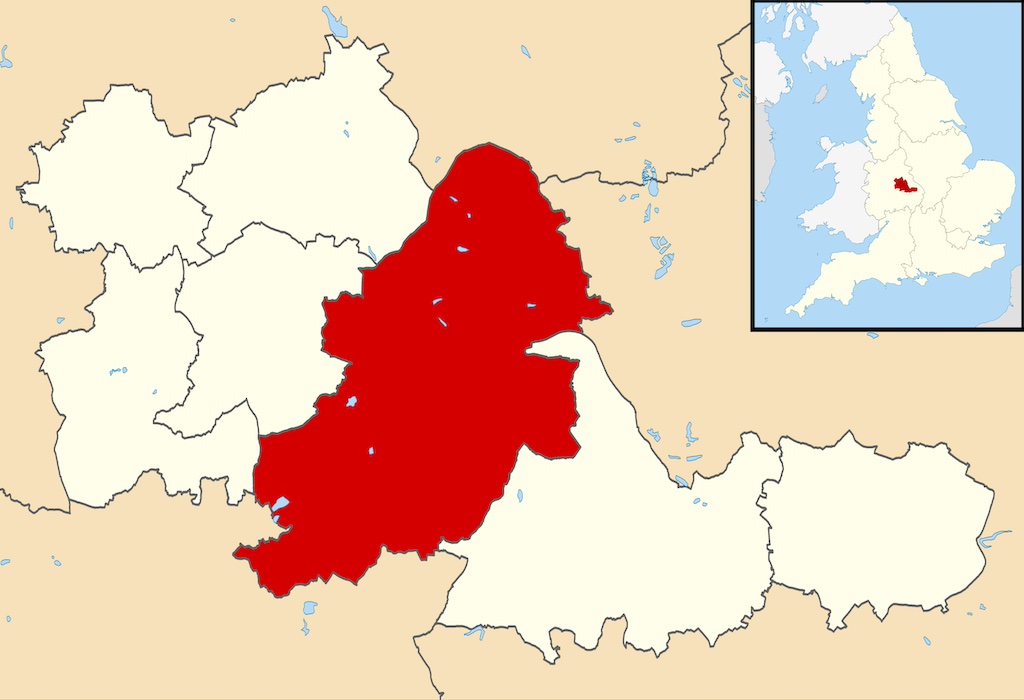
Birmingham Map
From the ongoing equal pay claims affecting thousands of workers to the recent bin strike that left streets overflowing with rubbish, Birmingham’s story is one of transformation and perseverance.


General Facts about Birmingham
Here are 10 general facts about Birmingham. How many of these did you know?
#1: Birmingham’s Canals Surpass Venice’s Network
With 35 miles of navigable waterways weaving through central Birmingham, the city’s canal system actually exceeds Venice’s famous 26-mile network.
These historic waterways, originally built to transport coal and iron during the Industrial Revolution, now serve as picturesque routes for narrowboat tours and waterside dining.
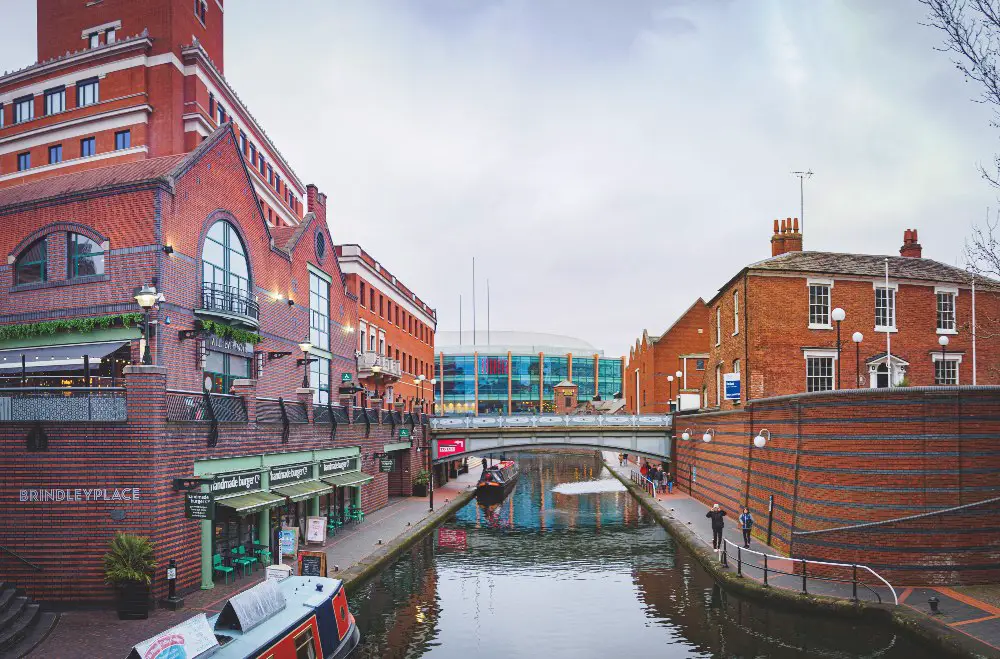
Not only that but there are more cubic metres of water passing through Birmingham’s canals than in any other city on Earth! You can hop on a boat at Gas Street Basin and take a tour of the city, learning about its industrial heritage.
During the 2023 and 2025 bin strike, the canals became unfortunate collection points for overflowing rubbish until Birmingham City Council implemented emergency measures with support from neighbouring councils.
#2: The City Inspired The Lord Of The Rings and The Hobbit
Not many people know this but the city’s landscape and surrounding countryside provided J. R. R. Tolkien with inspiration behind the sagas The Lord of the Rings and The Hobbit. The author grew up in Moseley from the age of four, with the books being based on places and people in this area.
The ‘Shire’, the home of the Hobbits, was inspired by the fields and mill at Sarehole, a village now absorbed into the city’s suburbs, whilst Perrott’s Folly and the Waterworks Tower in Edgbaston, along with the University of Birmingham’s illuminated clock tower, can be seen in The Lord of the Rings.
Today, visitors can follow the Tolkien Trail through Birmingham’s parks and historic sites that fired the author’s imagination.
#3: The Youngest City in Europe
Nearly 40% of Birmingham’s population is under 25 years old, giving it the youngest demographic profile of any major European city.
This youthful energy stems from the city’s five universities attracting students worldwide, its booming tech sector creating entry-level jobs, and cultural institutions like the Rep theatre nurturing young talent.
However, this demographic also strains public health services, with Birmingham City Council declaring a major incident during peak periods of demand.
➤ Psst… Looking for a place to stay?
Find all the best Birmingham hotels on Booking.com. Easily find, book and enjoy great hotel deals with free cancellation on one easy platform. Our top suggestion – The Exclusive Jacuzzi Apartment, in the heart of the city and is rated 10/10 Exceptional!
#4: Home to the World’s Largest Collection of Pre-Raphaelite Paintings
The Birmingham Museum and Art Gallery holds the planet’s most comprehensive collection of Pre-Raphaelite artworks, with over 3,000 paintings, drawings and decorative objects.
Highlights include Dante Gabriel Rossetti’s haunting “Proserpine” and Edward Burne-Jones’s stained glass designs, with the artist having been born on Bennetts Hill. These works established Brum as a Victorian-era cultural capital.
#5: The Jewellery Quarter’s Global Influence
Producing 40% of all UK jewellery, Birmingham’s historic Jewellery Quarter remains the epicentre of British craftsmanship.
The district’s Victorian workshops still house family-run businesses creating bespoke pieces, while the Assay Office tests over 12 million items annually.
Nearby Small Heath developed as a complementary district for gem trading and metalworking, though recent pay cuts have challenged these traditional industries.
#6: Sutton Park: Europe’s Largest Urban Park
Spanning 2,400 acres, Sutton Park’s vast green spaces include seven lakes, an ancient Saxon hunting ground, and rare lowland heath habitat.
This natural treasure hosts major events like the Birmingham Marathon and Moseley Folk Festival, though budget constraints left some areas unable to accommodate gatherings in 2023.
Birmingham City Council manages over 8,000 acres of parks citywide, earning the city recognition as one of Britain’s greenest cities.
Read more: Best Time to Visit Birmingham (Guide)
#7: A Stained Glass Legacy
Birmingham Cathedral showcases stunning stained glass designed by Pre-Raphaelite master Edward Burne-Jones, while the nearby St. Martin’s Church features contemporary glass commemorating the city’s industrial heritage.
These artworks reflect Brum’s tradition of glass craftsmanship that began with medieval glaziers and continues today in studios across the West Midlands.
#8: Europe’s Largest Local Government
Birmingham City Council is the biggest local authority in Europe, with 101 councillors representing an estimated population of 879,000 citizens across 77 wards, as of 2025.
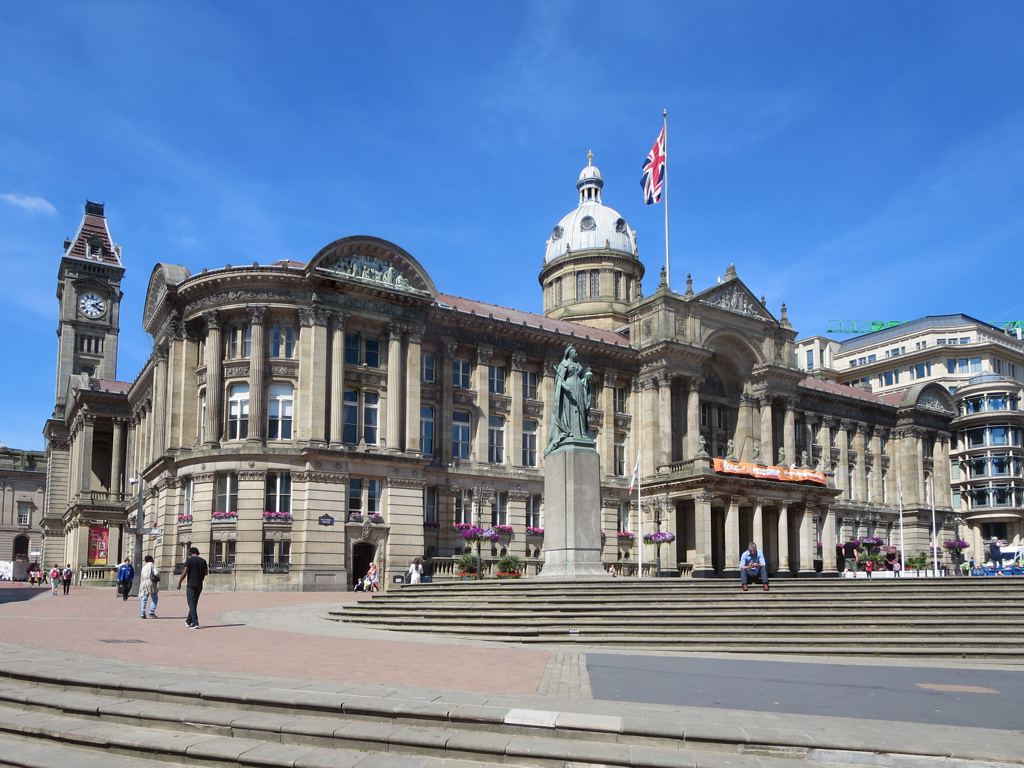
Currently facing £1 billion in equal pay claims from predominantly female workers, the council’s financial crisis has led to service reductions and heated picket line protests organised by Unite leader Sharon Graham. These challenges reveal tensions between municipal responsibilities and budget realities.
Related: 24 Interesting Facts About The Black Country (by a Yam Yam)
#9: Birthplace of Heavy Metal Music
The pounding rhythms of Birmingham’s factories directly inspired Black Sabbath‘s revolutionary sound in the late 1960s. Local venues like The Crown Pub hosted early performances by Ozzy Osbourne and fellow metal pioneers Judas Priest, while today’s scene thrives at spots like the Sunflower Lounge.
Other famous Brummie musicians and bands include: The Streets, UB40, The Moody Blues, Jamelia, Slade, Robert Plant, Ocean Colour Scene, Toyah Willcox, Laura Mvula, Dexys Midnight Runners, Ali Campbell, and Duran Duran.
#10: Home to Global Icons
From music legend Ozzy Osbourne to acting royalty like Dame Julie Walters, this town has nurtured extraordinary talent. The late poet Benjamin Zephaniah honed his craft in the city’s multicultural neighbourhoods, while scientist Joseph Priestley discovered oxygen here.
Other famous people from Brum include: TV personalities Jasper Carrot and Cat Deeley, and sports stars like Nigel Mansell, Walter Abbott, Gabriel Agbonlahor, Moeen Ali, and Dennis Amiss.
Further reading: Best Free Things to Do in the West Midlands (Guide)
12 Historical Facts about Birmingham: Industrial Legacy & Modern Transformation
Below are the most fascinating history facts about Birmingham:
#11: The Titanic’s Anchor Was Forged Here
The massive 15-ton anchor of the RMS Titanic was crafted at Noah Hingley & Sons in Netherton, just six miles from the city centre. This engineering marvel required 20 shire horses to transport it to the docks, showcasing the West Midlands’ manufacturing might.
Today, replicas can be seen at the Black Country Living Museum, where demonstrations reveal traditional metalworking techniques that built Brum’s reputation. The original anchor now rests at the bottom of the Atlantic, a silent testament to the city’s industrial prowess.
#12: Bullring’s Markets: A 900-Year Commercial Legacy
The Bullring has been home to indoor and outdoor markets since the 12th Century.
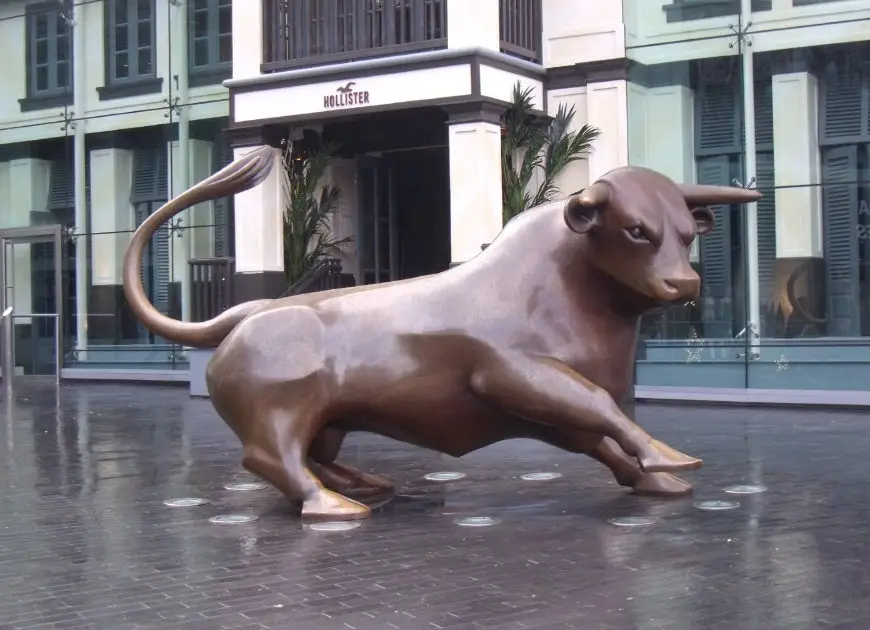
Trading continuously since 1166, the Bullring markets have evolved from medieval wool stalls to the largest urban shopping district on the continent. The iconic bronze bull statue – weighing 6.5 tonnes—symbolises the city’s mercantile spirit.
Historic documents show that the original market charter was granted by King Henry II, linking modern commerce to medieval roots.
During the 2023 bin strike, market traders reported a 30% drop in footfall as rubbish accumulated around the site, prompting Birmingham City Council to prioritise waste collection in the area.
#13: Birthplace of the FA Cup
The world’s oldest football trophy was crafted by Martin, Hall & Co. in the Jewellery Quarter in 1871. This silver cup inaugurated competitive football as we know it, with the first match played between Wanderers and Royal Engineers.
The city also hosted the world’s first football league in 1888, when Aston Villa became founding members. Recent challenges like pay cuts for ground staff have sparked debates about preserving sporting heritage while maintaining fair wages for workers.
#14: St. Chad’s Cathedral: Pugin’s Gothic Masterpiece
Designed by Augustus Pugin (co-architect of London’s Houses of Parliament), this Grade I-listed cathedral introduced Gothic Revival architecture to the city in 1841. Its 200-foot spire dominates the city’s environment, visible from the M6 motorway.
The cathedral’s catacombs hold the remains of 19th-century clergy, while its archives document Birmingham’s Catholic community during the Industrial Revolution. Restoration projects now face funding shortages due to the council’s financial constraints.
#15: Matthew Boulton: The Industrial Revolution’s Wealthiest Man
At his 18th-century peak, Boulton’s Soho Manufactory employed 1,000 workers producing everything from silverware to steam engines. Adjusted for inflation, his £7.4 million fortune would dwarf modern billionaires.
Boulton’s partnership with James Watt birthed commercial steam power at their Birmingham factory, though contemporary equal pay claims contrast sharply with Boulton’s era of unregulated industry. His Soho House mansion now operates as a museum showcasing Enlightenment-era innovation.
#16: Birthplace of the Postage Stamp
The postage stamp was invented in Birmingham in 1839, by a schoolteacher named Rowland Hill. He went on to establish the first modern postal system in Britain.
#17: Cluedo was Invented in Birmingham
The murder mystery board game Cluedo is loved by millions around the world and, though owned by the American company Hasbro, it was actually invented in Birmingham in 1943, by Anthony E. Pratt. There’s a plaque on the wall of a house on Brighton Road, where Pratt used to live and made the game.
Related post: 41+ Fun Facts About Stoke-on-Trent
#18: The First Steam Engine was Built in the Black Country
The first ever working steam engine was built in the Black Country region on the outskirts of the city. The groundbreaking invention was the most important development of the Industrial Revolution, which also began in this city.
Did you know: Birmingham and Black Country are two separate entities? Get the full story in our Brummie vs Black Country (Yam Yam) guide.
#19. The Birthplace of Heavy Metal
Brum claims the rightful home as the birthplace of the Heavy Metal music genre, influenced by the city’s industrial landscape. Pioneers include the members of Black Sabbath whom all grew up working factories in the city, as well as Robert Plant of Led Zepellin, Judas Priest, Napalm Death, and more.
#20: Tennis was Invented on a Lawn in Birmingham
The game of tennis was invented in Birmingham in 1859, on the lawn of a Spanish merchant’s home in the Edgbaston district. Augurio Perera and his friend Harry Gem, a court clerk, devised the new game by combining elements of other popular sports of the era, such as Racquets and Basque pelota.
5 Birmingham Foodie Facts
Next, we have some fun food facts about Birmingham you probably never knew:
#21: Birmingham is the Birthplace of Balti
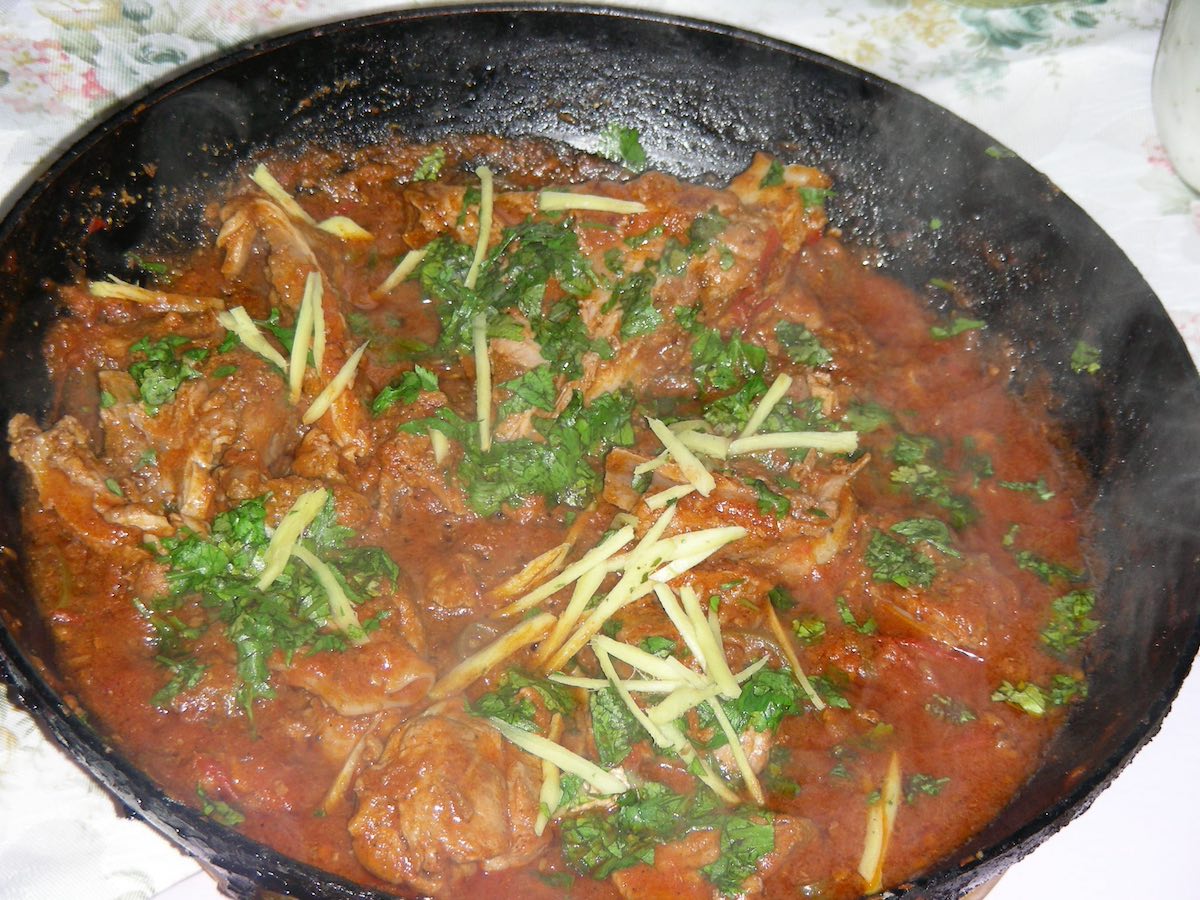
The iconic Indian Balti dish was first served in a restaurant in Stoney Lane in the Sparkbrook district, in 1977. The city is now home to over 100 Balti houses, and its famous Balti Triangle attracts over 20,000 visitors a week. The popularity of the dish has helped made Indian food the UK’s favourite dish, with the curry market in Britain worth a whopping £4bn a year!
#22: Second Highest Number of Michelin Star Restaurants in the UK
With five Michelin-starred establishments, the city surpasses culinary hubs like Manchester and Edinburgh. Chefs like Aktar Islam (Opheem) blend Indian flavours with modern techniques, while Simpsons in Edgbaston showcases seasonal British produce.
Psst… Fancy a Food Tour of Brum?
This self-guided half day tour of Birmingham takes you on a culinary adventure of 5 of the city’s best restaurants, easily the best way to divulge in the city’s world-class cuisine.
#23: The World’s 5th Busiest McDonald’s
In central Birmingham you’ll find the 5th busiest McDonald’s in the world, on New Street close to the main train station. It was also one of the first to ever open on Christmas day.
#24: The 2nd Largest Confectionery Manufacturer in the World
Cadbury’s Bournville factory produces 1.5 million Dairy Milk bars daily, supplying 160 countries. It’s the nation’s favourite chocolatier and has become the world’s second-largest confectionery manufacturer.
Visitors to Cadbury World can tour chocolate-making demonstrations and explore the brand’s 200-year history – Book tickets here for a sweet journey through interactive exhibits and chocolate tastings. The factory’s “Glass and a Half” philanthropy program has donated £1 billion to community projects since 1931.
#25: Home of Major Household Food Brands
Typhoo Tea pioneered the tea bag in 1903 at its Digbeth factory, while HP Sauce‘s original recipe was crafted in a backstreet Aston workshop.
Bird’s Custard revolutionised dessert-making in 1837 by creating the first egg-free custard powder, solving food safety concerns of the Victorian era. These brands collectively employ over 5,000 workers in the West Midlands today.
A Global Leader in Science and Medicine
Here are some incredible science and medicine facts about Birmingham:
#26: Home of Great Scientists and Inventors
Birmingham was home to some of the greatest scientists and inventors of the Industrial-era including Matthew Boulton, James Watt and William Murdoch, leading Brum to be the first manufacturing city in the world.
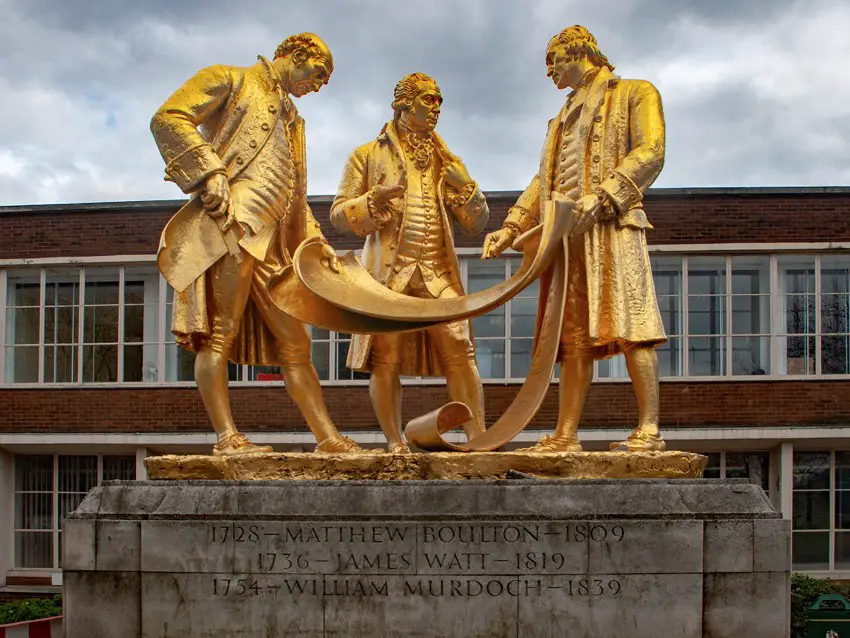
Matthew Boulton’s Soho Manufactory became Europe’s first integrated factory, while James Watt’s improved steam engine powered global industrialisation. William Murdoch’s 1792 gas lighting experiments illuminated streets decades before London adopted the technology.
Their collaborations at the Lunar Society – dubbed the “18th-century brain trust” – laid foundations for modern engineering principles still taught at local universities today.
#27: The City where Gas Lighting was Discovered
Birmingham engineer William Murdoch first discovered gas lighting in 1792. Originally from Scotland, Murdoch travelled on foot over 300 miles to Birmingham to begin work with a steam engine manufacturer.
He paved the way for the widespread installation of gas street lighting. The first street in Birmingham to have gas street lighting became known as Gas Street in 1818.
##28: Joseph Priestley’s Revolutionary Discoveries
While serving as a minister at New Meeting House, Priestley isolated oxygen by heating mercury oxide in a sealed apparatus – a breakthrough displayed at the Birmingham Science Museum.
Priestley also invented the rubber eraser and in 1767 carbonated water, which spawned the soft drink industry, with Schweppes establishing its first UK plant here in 1799. The scientist’s liberal philosophies also influenced America’s founding fathers during his exile in Pennsylvania.
#29: Medical Innovation: The Plaster Cast
Thomas Allcock’s 1856 invention of porous cotton-and-plaster bandages replaced wooden splints, reducing amputations from compound fractures by 70%.
The Royal Orthopaedic Hospital later pioneered specialised casting techniques, including fiberglass replacements in the 1970s. Today, 3D-printed casts developed at local universities continue this legacy of medical innovation.
Read more: When Is The Best Time to Visit the West Midlands?
#30: The World’s First Hole-In-The-Heart Surgery
The first ever hole-in-the-heart surgery was carried out in 1950 at Birmingham’s Children’s Hospital, a world-famous specialist pediatric centre.
#31: World’s Largest Single Floor Critical Care Unit
As well as being one of the largest and best hospitals in the country, the Queen Elizabeth Hospital’s critical care unit spans 65,000 sq ft – equivalent to 12 football pitches – with capacity for 100 ICU beds.
This pioneering facility, opened in 2010, was designed to streamline emergency response times during major incidents, having treated victims of the 2017 Manchester Arena bombing and COVID-19 surges. Its centralised layout allows specialists to coordinate complex trauma cases 30% faster than traditional multi-floor units.
#32: Birmingham is Home to 5 Universities
They include: University of Birmingham, Aston University, Birmingham City University, Newman University, and University College Birmingham.
The UoB’s 276-foot clock tower inspired Tolkien’s Minas Tirith, while Aston University’s business school ranks among Europe’s top 50. Newman University specialises in teacher training, and UCB dominates hospitality education with its Michelin-star-trained chefs. Collectively, these institutions attract £1.2 billion in annual research funding.
Further Reading: Made in Brum: 21 great gadgets that Birmingham gave to the world
Crazy and Weird Facts about Birmingham
Below are the most strange and weird Birmingham facts:
#33: Solihull was Named after ’Soily Hill’
Archaeological evidence suggests this “soily hill” served as a waste site for Birmingham’s early metalworking industries, with soil samples showing elevated lead levels from 13th-century smelting.
Today, the affluent borough ironically ranks among England’s least polluted areas, its Tudor-style high street contrasting sharply with its industrial past. The Birmingham City Council archives contain medieval complaints about the “foul earth” being carted to Solihull from city workshops.
#34: Birmingham has the Highest Number of Uninsured Drivers in the UK
There are approximately 1 million uninsured drivers in the country, making up around 4% of all motorists in the UK.
The West Midlands Police ANPR cameras flag 500 uninsured vehicles daily, with offenders facing £300 fines and license points. High premiums in areas like Neachells – where 22% of drivers lack coverage – reflect socioeconomic disparities. A 2023 council initiative offered subsidised insurance for low-income residents, but uptake remains below 15%.
Driving around Birmingham?
The best way to get around this region is by car, for flexibility, speed and comfort. If you don’t have your own, we recommend renting a car. Our go to site is DiscoverCars – we’ve used them at home and abroad for years, and we like their transparency, great reviews, and easy-to-use site.
#35: Home of the Spaghetti Junction
Birmingham is home to the Spaghetti Junction which is world-famous – people travel here from around the world just so they can drive around it.

Located just over a mile away from the city centre, the Spaghetti Junction is on the M6 motorway – the busiest stretch of motorway in Europe.
#36: There’s a Crater on the Moon called Birmingham
The 92-mile-wide “Birmingham Crater” near the Moon’s north pole was named by astronomer Johann Schröter in 1788, honouring the Lunar Society’s scientific contributions.
NASA’s Artemis program recently mapped its permanently shadowed regions for potential ice deposits—a fitting tribute to the city that helped launch the Industrial Revolution.
#37: A Pub Named after a 400 Million Year-Old Glacial Boulder
The Great Stone in Northfield is not only one of the oldest pubs in Birmingham, but its also named after a nearby 400 million year-old glacial boulder, that is known locally as ‘The Great Stone’. According to historians, the boulder travelled all the way from Snowdon, to Northfield, on an ice sheet during the Ice Age.
#38. 90% of the UK can be reached from Birmingham in under 4 hours
Another amazing fact is that you can get to almost anywhere in the UK, including the far reaches Wales and Scotland, in less than 4 hours drive, due to the city’s strategic location in the heart of England. How cool is that!
#39: 3 out of 4 of All Pen Nibs in the World was Produced Here
There’s a reason why Birmingham is known as the “Pen Shop of the World“. In 1875, three-quarters of all pens on earth had nibs made in this city.
#40: A City of Many Nicknames
Birmingham has many nicknames that define its history and identity, some of the most prominent include: City Of A Thousand Trades, Brum, 0121 (after the city’s dialling code), Second City, Pen Shop Of The World, Venice Of The North, and Workshop Of The World.
Bonus Fact #41: Birmingham, Alabama is named in honour of Birmingham, UK
During the post-Civil War Reconstruction era, three farm towns merged to become one large city, and the city’s founders named it in honour of Birmingham, UK, one of the world’s premier industrial cities. Just like it’s namesake, the city developed a major industrial centre based on iron and steel industry, and rail transport, with most of the original settlers being of English ancestry.
Bonus Fact #42: Birmingham, UK is 700+ years older than Birmingham, Alabama
The American city was founded in 1871, while the original Birmingham was officially established in 1166, although the Beormingas tribes settled in the area and named it ‘Beormingham’, in 600 AD, which would make it more than a thousand years older than the US city!
Birmingham’s Crises & Resilience
#43. The 2023 Bin Strike: A City Under Pressure
For 62 days, rubbish piled up across the city as refuse collectors protested pay cuts imposed by Birmingham City Council. The waste service’s contingency plan – hiring temporary workers at £18/hour – cost £2.6 million but failed to prevent rodent infestations in Small Heath and Sparkbrook.
Union leader Sharon Graham organised daily picket lines outside depots, arguing the dispute reflected wider government austerity measures causing harm to frontline staff. By strike’s end, over 25,000 tons of waste required clearance, revealing vulnerabilities in the city’s environment management.
Public Health Crisis Looms as Strikes Continue in 2025
The return of bin strikes has pushed the city’s environment to a breaking point, with public health officials warning of a potential major incident if rubbish isn’t cleared within 72 hours.
Vulnerable communities in areas like Small Heath report being unable to safely access their homes due to rodent infestations, while the government faces calls to intervene as Birmingham City Council struggles to implement its waste service’s contingency plan.
Local events like the upcoming Digbeth Dining Club have been cancelled, causing harm to small businesses that rely on foot traffic.
Council Leadership Under Fire
With Birmingham City Council now holding crisis meetings daily, leaked documents reveal they’ve spent £1.2M on private waste contractors while pleading poverty to workers.
Opposition councillors accuse leadership of causing harm through mismanagement, noting the major incident protocol should have been activated sooner.
Meanwhile, picket lines grow daily outside Council House, where workers chant “No pay cuts, no service cuts” as passing drivers honk in support.
#44. Equal Pay Claims: A £1 Billion Reckoning
Since 2012 Birmingham City Council has faced lawsuits from 174,000 predominantly female workers – including cleaners, care staff, and cooks – who were paid less than male colleagues in comparable roles. This liability exceeds the council’s annual budget, forcing asset sales like the iconic NEC complex. The significant impact on services includes:
- Reduced library hours in communities like Handsworth
- Cancelled events at council-owned venues
- Postponed road repairs across the West Midlands
Legal experts estimate resolving all claims could take until 2030, with the government potentially intervening to prevent municipal bankruptcy.
#45. Public Health Emergencies
Birmingham declared a major incident during July 2022’s record 40°C heatwave when hospitals overflowed with heatstroke cases. The city’s environment team distributed water to homeless populations while cooling centres opened in libraries – many since closed due to the significant impact of budget cuts.
Similarly, winter 2023 saw ambulance wait times exceed 24 hours at Queen Elizabeth Hospital, underscoring strains on public health infrastructure serving 1.1 million residents.
Cultural Renaissance & Future Prospects
#46. HS2 & Urban Regeneration
The £20 billion HS2 rail project will connect the city centre to London in 45 minutes by 2033, with Curzon Street Station becoming the UK’s first new intercity terminus in over a century.
This investment has already spurred development in Digbeth and Smithfield, though communities like Bordesley Green face displacement. Birmingham City Council estimates the project will create 50,000 jobs, potentially offsetting recent pay cuts in traditional industries.
#47. John Cotton’s Textile Legacy Reimagined
Once the largest textile factory on the continent, the Small Heath mill founded by John Cotton in 1896 now houses tech startups and artist studios. This transformation mirrors Birmingham’s shift from manufacturing to creative economies, though debates continue about preserving industrial heritage.
The site’s 2024 reopening as a education hub will train 5,000 annually in green technologies – a poignant reinvention for the factory that once clothed British troops in World War I.
Bin Strikes Return as Pay Dispute Escalates (April 2025)
The bin strikes resumed as Birmingham City Council and Unite union remain deadlocked over demands for refuse workers to accept pay cuts of up to £8,000 per year – a devastating reduction for staff earning an average of £26,000 annually.
The council’s managing director Joanne Roney, who earns over £250,000 – nearly ten times a bin worker’s salary – has faced fierce criticism for pushing austerity measures onto frontline staff while refusing to curb executive pay.
With rubbish again piling up and public health warnings issued, Unite has accused the council of “saying one thing in public and another in negotiations,” prolonging a crisis that has left residents facing overflowing waste and rodent infestations.
The return of picket lines underscores growing tensions over inequality, as workers protest cuts they argue are causing harm to livelihoods while neighbouring councils and military planners scramble to manage the fallout by implementing the waste service’s contingency plan.
The Human Cost of the Pay Dispute
On the picket lines, workers share heartbreaking stories of choosing between heating and meals due to proposed pay cuts.
“This isn’t just about waste collection – it’s about dignity,” explains Unite rep Maria Kowalski, noting how the strikes disproportionately affect communities with high-density housing.
The council’s refusal to budge has left many workers feeling betrayed, especially after discovering management received £2M in bonuses last year while demanding frontline staff take £8K cuts.
Small Heath – Ground Zero for Strike Impacts
The Small Heath neighbourhood has become emblematic of the crisis, with fly-tipping hotspots now resembling landfills. Local mosques have organised volunteer cleanups to support elderly residents, while the government’s emergency support package remains tied up in bureaucracy.
“We’re unable to let children play outside,” laments parent Amir Khan, as the council admits its waste teams can only cover 40% of scheduled collections.
More Data & Statistics
- Land area: City: 103.4 sq miles (267.8 square km)
- Region: West Midlands
- Country: England
- Sovereign State: United Kingdom
- Founded: 600 AD (formerly Beormingaham)
- Denonym: Brummie
- Elevation: 460 ft (140m)
- Population: 2,665,100 people (3rd in England and UK)
- Currency: Pound Sterling GBP
- Language: English
- Ethnic groups: White (57.9%), Asian (26.6%), Black (8.9%), Mixed (4.4%), Other (2%)
- Largest Park: Sutton Park, 2,400 acres (970 hectares)
- International Airport: Birmingham (BHX)
- Official Website: www.birmingham.gov.uk
- Time zone: UTC+0 (GMT) UTC+1 (British Summer Time)
- Driving side: left
- Country Number/Prefix: +44
- Dialing code: 0121
- Postcode area: B
- Country Code: GBR
- Weather: 8C (winter), 24C (summer)
- Famous residents: Ozzy Osbourne, Led Zeppelin, UB40, David Edgar (poet), Benjamin Zephaniah (writer)
What is Birmingham famous for?
Birmingham is the birthplace of the Industrial Revolution. Known as the ‘first manufacturing town in the world’, it was hailed as the ‘City of a Thousand Trades’ after it achieved city status in 1889, thanks to the vast number of businesses that chose to base themselves in the area, largely due to its huge water network.
How old is Birmingham?
Over the course of 1400 years, Birmingham has evolved from a small 7th Century Anglo-Saxon hamlet on the edge of the Forest of Arden at the fringe of early Mercia, to become a major city.
What are Birmingham people like?
Known as Brummies, the people of Birmingham are fairly friendly and hospitable. Though the English are considered the most frosty of English speaking peoples, Birmingham is one of the friendlier cities.
What makes Birmingham unique?
Brum, as the city is affectionately known, is one of the UK’s greenest cities, with over 8,000 acres and 600 parks and open spaces. The city also hosts more than 50 festivals and events each year, including the enormous Birmingham International Jazz Festival, the Moseley Folk Festival, Flat Pack Film Festival, and the Fierce Art Festival.
Is Birmingham an expensive city?
Like most cities, Birmingham has its expensive regions and cheaper areas. Places like Solihull and Sutton Coldfield tend to be the most expensive, whereas Edgbaston and Perry Barr are reasonably priced. Moseley was voted the best place to live in the UK for city living in 2015. For a detailed guide, read our Best Places to Live in Birmingham article.
Ripple Effects Across the Region
The government has quietly deployed Army logistics teams to prevent rubbish piles from triggering a major incident, while neighbouring councils report their own workers refusing overtime to show solidarity.
Cultural events like the upcoming Birmingham International Jazz Festival may relocate, causing harm to the local economy. Education leaders warn schools near overflowing bins may close, leaving working parents unable to find childcare.
More Birmingham posts:
Top Kid-Friendly Summer Activities in Brum
Best Things to Do for Free in Birmingham
9 Best Places to Go Paddle Boarding Near Birmingham
Best Family Day Trips from Birmingham
Birmingham Maps & Travel Guides (Free PDF Downloads)